
What Houston Sleepers Need to Know Before Believing the Hype
It is 2:30 AM in Houston. The air conditioner is humming at 68°F and the humidity is sitting at 90 percent. You are wide awake – sweaty, kicking off the sheets, hunting for a cool spot on a mattress that seems determined to hold every degree of heat your body has produced since midnight.
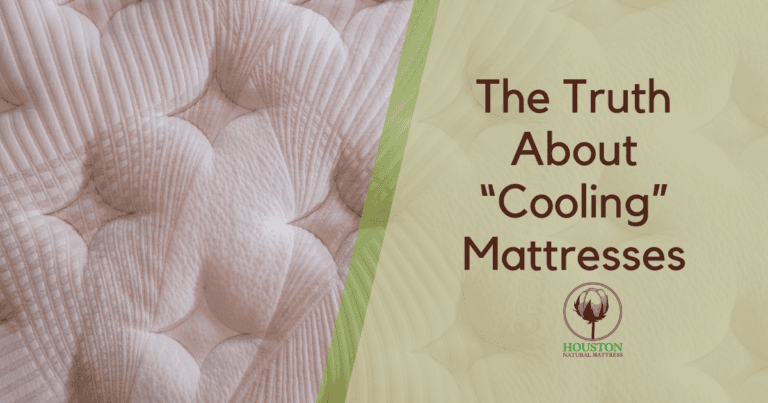
If you have shopped for a mattress recently, you have encountered the promises. Cooling gel. Copper-infused foam. Ice-touch fabric. Phase-change technology. The word “cooling” now appears on mattresses at nearly every price point, often paired with blue color palettes and frost imagery meant to suggest instant temperature relief.
Most cooling mattresses are designed to impress at the point of sale, not to manage heat through eight hours of Houston humidity. Understanding the difference is what separates a mattress that performs from one that simply markets well.
Quick Answer
Most “cooling” mattresses rely on gel or chemical additives that create a temporary cool sensation — one that typically fades once the material reaches body temperature. Real temperature regulation comes from breathable construction: natural latex, wool, organic cotton, and coil systems that allow heat and moisture to move away from the body rather than accumulating inside the mattress. In Houston’s climate, moisture management matters as much as heat dissipation. No additive can replicate what breathable structure does by design.
Keep reading for the full breakdown, the 10-minute showroom test, and a buyer checklist that cuts through the marketing.
Key Takeaways for Houston Sleepers
- Most “cooling” mattresses rely on gels or additives that create a temporary cool sensation but do not prevent heat buildup overnight.
- Breathable mattress construction matters more than surface treatments. Natural latex, wool, and coil systems allow heat and moisture to escape by design.
- Houston’s humidity makes moisture management as important as temperature control. Materials that move vapor away from the body outperform dense foam in this climate.
- A 10-minute in-store test is the simplest way to tell whether a mattress will actually sleep cool through the night – not a quick touch of the cover.
Why Houston Is Different
Houston’s humidity averages 70 to 90 percent through spring and summer, high enough to slow the evaporation of sweat from the skin, which is the body’s primary cooling mechanism during sleep. A mattress that traps moisture compounds that problem directly. And because synthetic foam off-gasses volatile organic compounds faster in warm rooms, Houston bedrooms carry a higher chemical load from foam beds than the same mattress would produce in a drier climate.
5 Cooling Claims That Fall Apart in Houston
Myth 1: Gel foam stays cool all night.
Reality: Gel is a heat sink with finite capacity. It draws heat away from the skin for the first 20 to 30 minutes, then reaches body temperature and stops. At that point, the dense foam underneath takes over – and dense foam is an insulator. In Houston’s humidity, gel foam also traps moisture at the surface, creating the clammy feeling that wakes you up.
Myth 2: Phase-change materials regulate temperature through the night.
Reality: PCMs absorb heat until they reach capacity, then stop working. In a temperate climate that saturation point may not be reached until late in the night. In Houston, where ambient temperature and humidity are both elevated, PCMs saturate faster – often within the first hour or two – leaving the rest of the night unmanaged.
Myth 3: Copper and graphite infusions remove heat from the mattress.
Reality: Conductive infusions move heat within the mattress, not out of it. Without structural airflow channels, the heat simply redistributes into the foam rather than escaping. It is a partial solution presented as a complete one.
Myth 4: Cooling covers solve the heat problem.
Reality: Covers affect only the sleep surface. The heat building under your hips and lower back comes from the core material. A cooling cover on a dense foam mattress is a cold compress on top of a heat trap.
Myth 5: More cooling layers means cooler sleep.
Reality: Each additional foam layer reduces airflow. Thick pillow tops and deep comfort layers tend to trap more heat than thinner constructions. Houston sleepers need ventilation, not more foam.
Cooling Additives vs Breathable Materials
| Feature | Synthetic “Cooling” Foam | Natural Latex, Wool & Coils |
|---|---|---|
| Cooling Method | Heat absorption (finite) | Airflow + moisture wicking |
| Duration | 20–60 min, then traps heat | Consistent all night |
| Moisture Control | Traps sweat – clammy surface | Wicks vapor – dry surface |
| Houston Humidity | Compounds heat retention | Optimized for circulation |
| VOC Off-Gassing | Accelerates in warm rooms | GOTS / GOLS certified organic |
| Long-Term Performance | Degrades as additives saturate | Intrinsic to material structure |
The distinction matters: additives attempt to manage heat after it forms. Breathable materials prevent it from accumulating in the first place. Structural properties are intrinsic and durable. Additives saturate, degrade, and fade.
What Actually Works
Natural Latex
Natural latex has an open-cell structure by nature – air circulates freely through the material without any infusions or treatments. Unlike memory foam, latex does not envelop the body in insulating contact. Every time you move, the material pushes warm air out and draws cooler air in. The thermal performance is intrinsic to the material and consistent across the life of the mattress. For Houston sleepers, latex’s moisture resistance is equally important: the sleep surface stays drier than any synthetic foam alternative.
Wool
Wool fiber is hygroscopic – it actively draws moisture vapor away from the body and releases it into the surrounding air. Quality wool can absorb up to 30 percent of its own weight in moisture without feeling damp. In Houston’s climate, where humidity is often as much of a disruptor as temperature, this moisture management is not a secondary feature. It is the primary reason wool outperforms synthetic alternatives here. Wool also serves as a natural fire barrier, eliminating the need for the chemical fire retardants that restrict airflow in most synthetic mattresses.
Pocketed Coil Systems
A coil support system allows substantially more airflow through the mattress than any all-foam construction. The space between coils is air, not insulating material. Heat rises and dissipates rather than accumulating. Hybrid mattresses that combine a pocketed coil base with a latex or wool comfort layer capture the benefits of both: the airflow of a coil system and the breathable, moisture-resistant surface above it.
Organic Cotton Covers
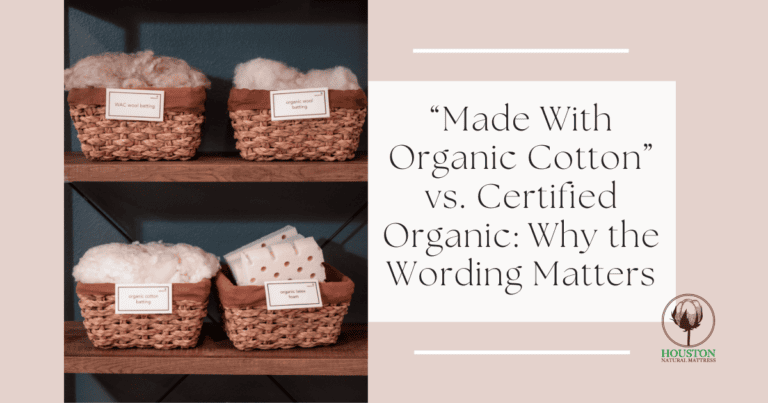
The cover is the first point of contact between the sleeper and the sleep surface. Tightly woven synthetic covers – even those treated with cooling finishes – trap moisture and restrict airflow. GOTS-certified organic cotton, knit or woven with an open construction, allows heat and moisture to move through rather than accumulate. The chemical finishes common in conventional covers also off-gas in warm conditions; organic cotton avoids them entirely.
Your Mattress Cannot Do It Alone
Even a well-built natural mattress cannot compensate for a synthetic sleep system layered on top of it. Sheets, protectors, and blankets each affect the thermal environment at the sleep surface.
- Sheets: Organic cotton percale or linen. The open weave structure of percale allows airflow that sateen and synthetic blends block. Linen wicks moisture and improves with washing.
- Mattress protector: Cotton-knit or wool construction rather than dense waterproof barriers. Plastic-backed protectors trap heat and moisture regardless of what is underneath them.
- Blanket or duvet: Lightweight wool fill for Houston’s spring and summer. Wool wicks moisture through the night rather than retaining warmth the way synthetic fills do.
- Room environment: A ceiling fan set to push air downward (counterclockwise in summer) creates a wind-chill effect that helps the sleep surface stay cooler. Steady room temperature between 67 and 69°F gives the mattress and bedding the best conditions to work.
Comfort in Houston comes from the entire sleep system working together – not from a single product with a cooling label.
The 10-Minute Showroom Test
Do not test a mattress the way most people do. Do not touch the cover with your hand. A cold-to-the-touch surface is the oldest trick in the industry — it tells you about initial conduction, not about what happens at 2:30 AM.
Instead, lie down in your normal sleep position for ten minutes. Then check three things:
- Heat buildup: Do your hips or lower back begin to feel warm? Heat building at pressure points signals poor airflow in the core material. On latex or a polyurethane-free coil hybrid, you should feel neutral. On foam, you will feel warmth starting to build.
- Airflow: Does the mattress feel open and breathable, or does it feel sealed around your body? A breathable mattress allows ambient air to reach the skin. A dense foam construction creates an envelope.
- Use the checklist below before you leave.
Quick Buyer Checklist: How to Spot Real Cooling
These questions cut through cooling marketing in any showroom or product page:
- What is the core material? Latex and coil systems allow substantially more airflow than dense foam cores. This is the single most important variable.
- Does the mattress contain natural wool? Wool actively manages humidity and moisture vapor – the thing most cooling additives cannot do.
- What is the cover made from? GOTS-certified organic cotton breathes better than polyester blends and avoids the chemical finishes that off-gas.
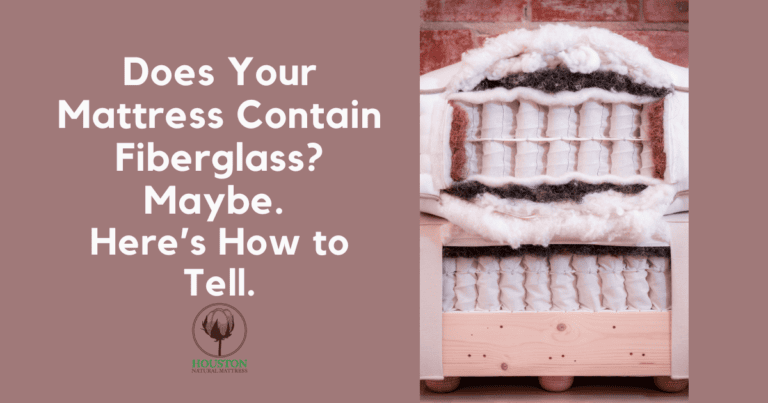
- Is the fire barrier wool or synthetic? Wool breathes and wicks. Fiberglass and chemical barriers restrict airflow and introduce chemical exposure.
- Are the cooling claims additive-based or structural? Gel, copper, and phase-change coatings are additives. Latex, wool, and coil construction are structural. Structural breathability lasts the life of the mattress. Additives do not.
Frequently Asked Questions
Do cooling gel mattresses actually work?
For 20 to 30 minutes, yes. Once the gel reaches body temperature, it stops drawing heat, and the dense foam beneath takes over. Long-term cooling depends on structural breathability, not additives.
What mattress material sleeps the coolest?
Natural latex consistently ranks among the coolest-sleeping materials in independent testing, followed by pocketed coil and hybrid constructions. Memory foam – including gel-infused variants- ranks among the warmest. A latex-over-coil hybrid is one of the most reliably cool-sleeping constructions available.
Why does my cooling mattress feel great in the store but hot at home?
Showrooms are temperature-controlled and dry. Houston bedrooms are not. The showroom test lasts two minutes in low humidity. Sleep lasts eight hours at 90 percent humidity. The materials that fail in Houston pass in showrooms because the conditions are entirely different.
Does humidity affect how hot I sleep?
Significantly. Humidity slows the evaporation of sweat from the skin, which is one of the body’s primary cooling mechanisms during sleep. In Houston’s climate, moisture management is as important as heat dissipation – which is why wool outperforms synthetic cooling materials here.
Will a cooling mattress help with night sweats?
It can help considerably if the mattress is the source. Night sweats can also result from room temperature, sleepwear, hormonal changes, or medical causes. A breathable natural mattress is the right first step; persistent or severe night sweats warrant a conversation with a physician.
Houston Natural Mattress
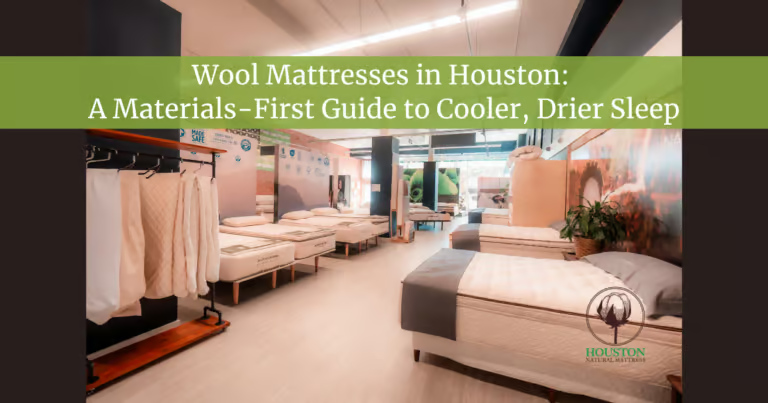
We carry a curated selection of natural and organic mattresses built around the materials covered in this article – latex, wool, organic cotton, and coil systems – each with full certification transparency and materials disclosure. Our mattress brands include Avocado, Naturepedic, The Natural Mattress Home, Posh & Lavish, and Vispring. For bedding, we carry Coyuchi, Naturepedic, Avocado, and Sleep & Beyond.
Our team can show you how each construction performs in Houston’s climate and help you run the 10-minute test on mattresses designed for real cooling, not showroom tricks.
Test latex vs gel foam tomorrow. Feel the 10-minute difference yourself.
We serve the Greater Houston Metro, including Rice Village, River Oaks, the Heights, Upper Kirby, Montrose, and the Museum District.
Location:
6111 Kirby Dr
Houston, TX 77005
(832) 582-6324
houstonnaturalmattress.com
Store Hours:
Monday–Friday: 10am–7pm
Saturday: 10am-5pm
Sunday: 12pm–6pm
About the Author
Amanda Demuth, MSN, RN · Wellness Advisor, Houston Natural Mattress · Member, American College of Lifestyle Medicine