
If you’ve been shopping for a natural pillow, you’ve probably noticed how limited the options can feel. Many pillows still rely on memory foam or synthetic fiberfill, even when they’re marketed as “eco-friendly”.
That’s often when people start hearing about kapok.
Kapok is a natural, plant-based fiber used in organic pillows as an alternative to both synthetic fills and animal-based down. It’s soft, airy, and breathable – but it behaves very differently than most pillow materials people are familiar with.
Understanding what kapok is, how it feels, and how it’s used can help you decide whether it’s the right fit for your sleep.
What Kapok Is Made From
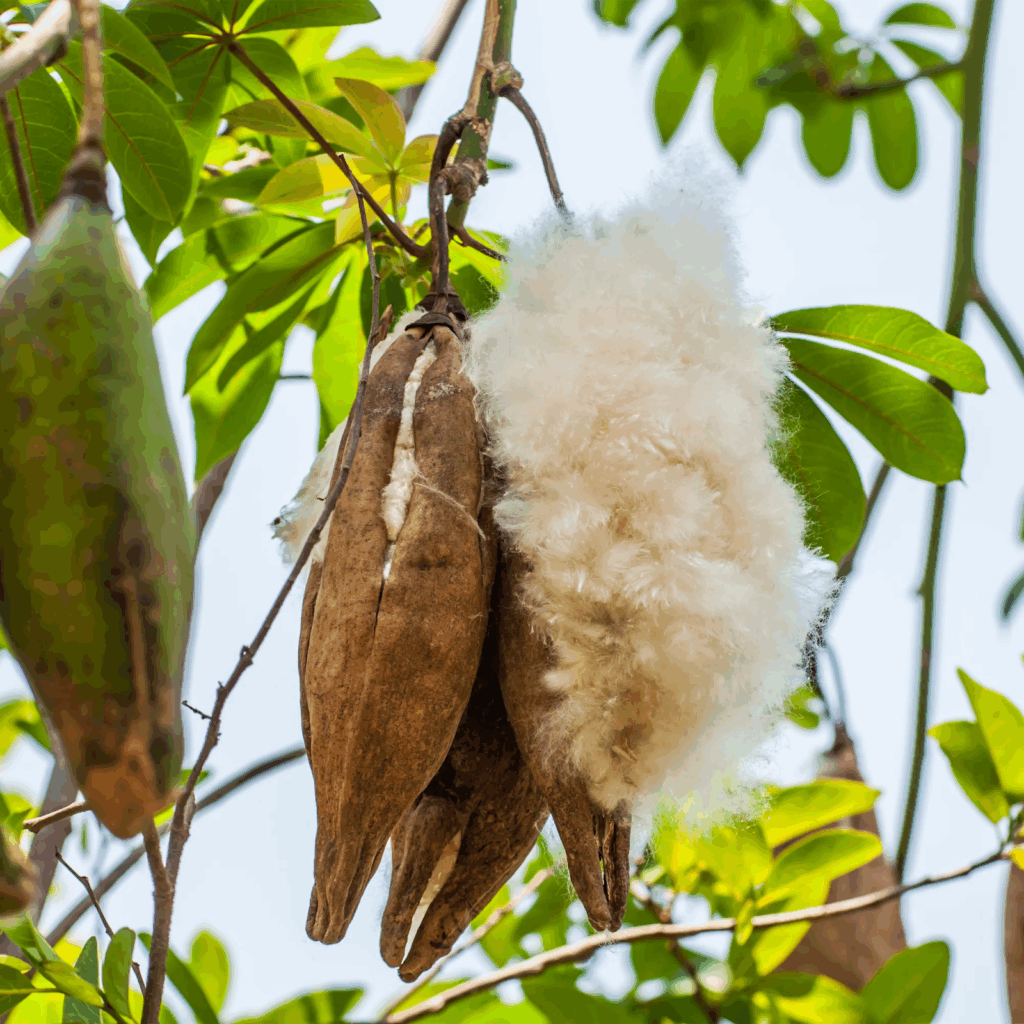
Kapok comes from the seed pods of the kapok tree, a tropical tree native to Central and South America as well as Southeast Asia. When the pods mature, they open and release silky fibers that surround the seeds.
Those fibers are harvested, cleaned, and used as a loose fill material.
Unlike cotton or wool, kapok is not spun into yarn. It’s used in its natural, fluffy form – similar to down. That structure is what gives kapok its lightweight, buoyant feel.
Why Kapok Is Considered a Natural Fiber
Kapok is considered a natural fiber because it comes directly from a plant source and requires minimal processing. Kapok trees grow without irrigation, pesticides, or fertilizers, which is why the fiber is often associated with more sustainable bedding.
That said, whether a pillow is considered natural or certified organic depends on the entire construction – including the cover fabric and how all materials are processed. Kapok itself is natural; the finished pillow matters just as much.
How Kapok Feels in a Pillow
Kapok is extremely lightweight. In a pillow, it tends to feel:
- Soft and buoyant, not dense
- Silky when paired with a quality organic cotton cover
- Responsive when you move, without slow sink
- Breathable, with minimal heat retention
Many people describe kapok pillows as airy or floating rather than heavy or structured. Because the fibers are naturally hollow, air moves easily through the pillow, helping it sleep noticeably cooler than memory foam.
Kapok works especially well for sleepers who want a soft pillow without trapped heat or resistance.
Kapok vs Synthetic Pillow Fills
Kapok behaves very differently from common synthetic fills.
Synthetic pillows are typically petroleum-based, heavily processed, and designed to hold a uniform shape. They often trap heat and rely on chemical treatments to feel soft.
Kapok pillows, by contrast:
- Use a natural, plant-based fill
- Allow airflow through the fibers
- Feel soft without heat buildup
- Respond quickly as you change positions
For sleepers trying to reduce synthetic materials in their bedroom, the difference is easy to feel.
Kapok and Organic Certifications
Kapok itself is natural, but certified organic pillows depend on more than the fill.
Certified organic kapok pillows typically include:
- Certified organic cotton covers
- Transparent sourcing and processing standards
- No chemical flame retardants or artificial softeners
Looking at certifications and full construction details helps separate genuinely organic pillows from those that simply use natural-sounding materials.
Kapok Pillows at Houston Natural Mattress
At Houston Natural Mattress, kapok is most commonly found in natural and organic pillows designed to offer a soft, breathable alternative to foam.
Try the Avocado Green Pillow
This adjustable pillow combines GOTS-certified organic kapok fiber with GOLS-certified organic latex, allowing sleepers to customize loft and support. Kapok provides softness and airflow, while latex adds gentle structure. It’s a popular option for people who want softness without collapse.
Pros of Kapok Pillows
Kapok pillows are often chosen because they offer:
- Natural, plant-based fill
- Soft, silky comfort without heaviness
- Excellent airflow
- Quick response when moving
- No petroleum-based foam
They’re especially appealing to people who sleep warm or prefer a softer, plusher feel.
Limitations of Kapok
Kapok isn’t ideal for everyone. Some considerations:
- Less structured than latex or wool
- May need occasional fluffing
- Not the best option for those who want a very firm pillow
Kapok performs best when softness and breathability matter more than strong support.
The Bottom Line
Kapok is a natural, silky plant fiber that offers a breathable alternative to synthetic pillow fills. It excels in pillows where softness, airflow, and responsiveness matter most.
For shoppers interested in natural or certified organic pillows, kapok is worth experiencing in person to understand how it compares to latex, wool, and down.
Try Kapok Pillows in Person in Houston
If you’re shopping for a natural or organic pillow in Houston, visiting a showroom makes a real difference. Texture, loft, and airflow are difficult to judge online.
At Houston Natural Mattress, you can try kapok pillows from Avocado, compare them with other latex and wool options, and get straightforward guidance from a team that understands how these materials actually perform.
Houston Natural Mattress
6111 Kirby Dr
Houston, TX 77005
(832) 582-6324
Store Hours:
Monday–Friday: 10 AM–7 PM
Saturday: 10 AM–5 PM
Sunday: 12–6 PM
Visit our Houston showroom to find a pillow that fits how you sleep – not just what’s trending.
No pressure. Just better materials and better sleep.
