
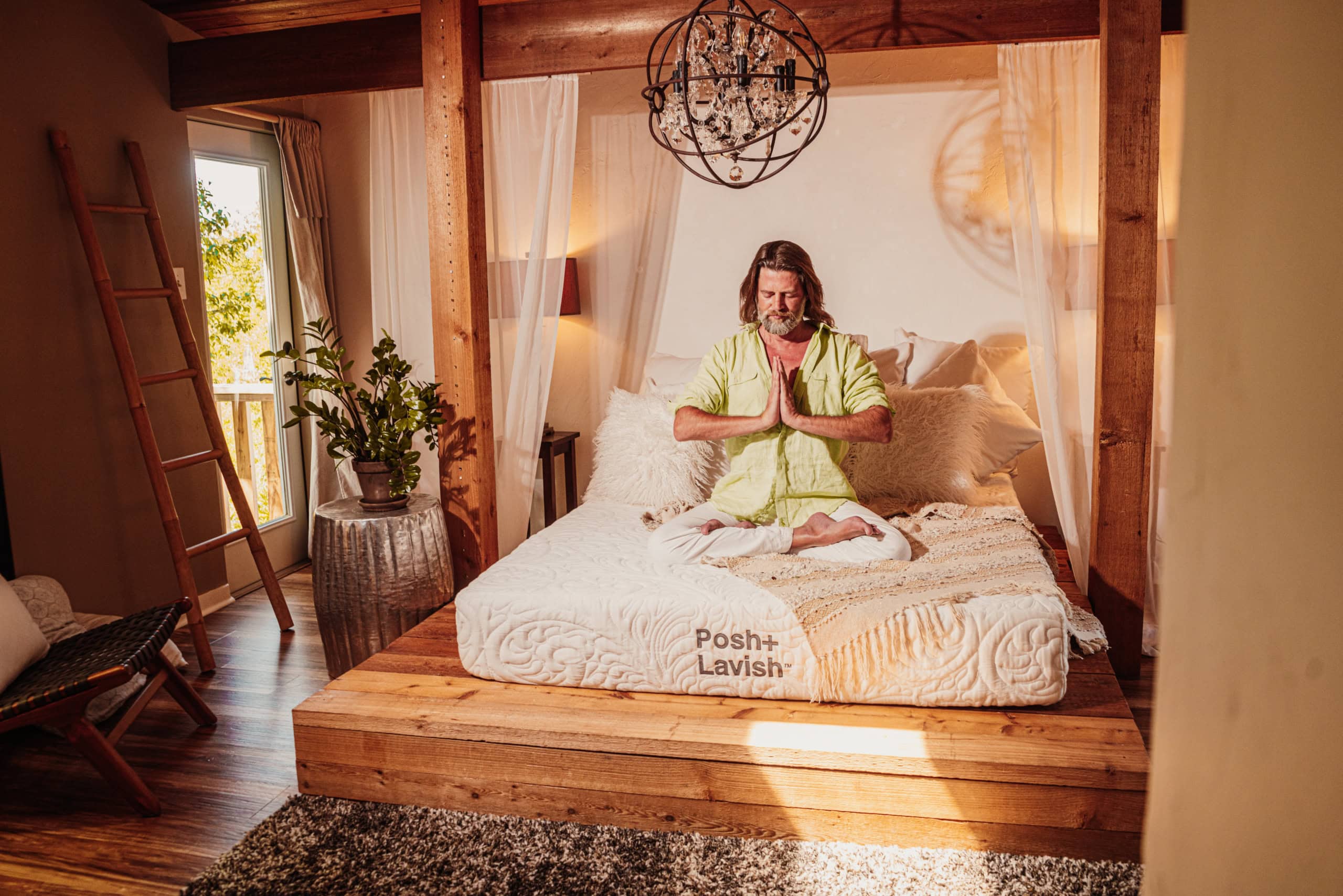
Houston is busy and humid; your bedroom should feel easy. If you want to end each day in a calm, cozy space that supports real rest, start with a few simple rules trusted by top interior designers, sleep coaches, and home-wellness experts.
After dark, light gets warm and low (and mornings get bright)
Design doesn’t matter if the light is wrong. At night, keep lamps warm and dim so your body understands it’s evening: swap in soft/warm white bulbs on the bedside table, keep overheads off after dinner, and dim for the last hour before sleep. Phones, tablets, and TVs should live in Night Mode after sunset—warmer color, lower brightness, a little farther from your eyes. The key is to minimize blue light which increases eye strain and can confuse your body that it is still daytime. Blackout drapery finishes the story; keep a tiny amber path light to the bathroom so you never blast yourself awake at 2 a.m.(Why this helps: Harvard Health on evening light & melatonin.)
The other half happens tomorrow morning. Within an hour of waking, get 10–30 minutes of outdoor light (porch coffee counts). That contrast, warm, dim evenings; bright, natural mornings, teaches your internal clock when to wind down and when to wake up.
Choose calming wall colors
Goal: calm mood + gentle light at night.
- Pick: low-saturation, soft hues, blue-gray (with a hint of green), sage/eucalyptus/soft olive, warm greige/taupe/mushroom, or pale oatmeal/parchment.
- Finish: scrubbable matte or eggshell on walls (cuts glare), satin/semigloss on trim only, and a soft warm white or half-tint on the ceiling.
- Test right: paint two 24″×24″ samples (two coats), view in morning, late afternoon, and under your warm bedside lamps with blackout closed, this is your true bedtime look.
- Avoid: bright reds/oranges, stark cool whites, and glossy walls (they amplify glare).
- Health note: choose low/zero-VOC paint, keep bedroom humidity ≤50%, and ventilate 48–72 hours before sleeping there.
Bottom line: soft blues/greens, warm or gentle neutrals in matte/eggshell = restful, luxe, and easy on the eyes at night.
Quiet the room: the hush that lets you exhale
Block outside sounds and soften echoes with heavier-lined curtains and a rug + thick pad. A door sweep takes the edge off hallway noise. You don’t need perfect silence; you need a steady, gentle hush. A low fan or white-noise machine turns sharp sounds into a background you don’t notice. (Benchmark: bedrooms around 30 dB LAeq with spikes below 45 dB LAmax; WHO guideline.) Don’t forget to switch phones to Do Not Disturb and park them on the dresser.
Declutter the space (less to look at, easier to relax)
Clear floors, hide cords, and use closed storage for “visual noise.” A tidy layout helps your body wind down. Keep a clear path to the bathroom and place the hamper and trash where you’ll actually use them.
Air that feels cool, dry, and easy to breathe
Most people sleep best cooler. In Houston, start near 67°F and fine-tune a degree either way. Keep humidity around 45–50% so the room feels dry, not muggy. A small hygrometer on the nightstand makes it effortless. If humidity won’t dip, run a quiet dehumidifier for a few evening hours. For cleaner air, add a HEPA purifier sized to your room and let it run on low overnight. (EPA guardrail: keep indoor humidity 30–50%, always under 60%, EPA guide.)
The mattress: where the hotel feel actually comes from
That five-star feeling isn’t about a mountain of pillows, it’s the core of the bed. The quickest path at home is a natural latex or organic latex-hybrid build:
- Cooler, drier nights. Latex’s open, springy structure moves air, so you’re not chasing cool spots.
- Even, instant support. It pushes back right away, your spine stays neutral whether you’re on your back or side.
- Quiet durability. Quality latex holds its feel for years, so you keep the “new bed” comfort.
Feel it in our Houston showroom (linked product pages):
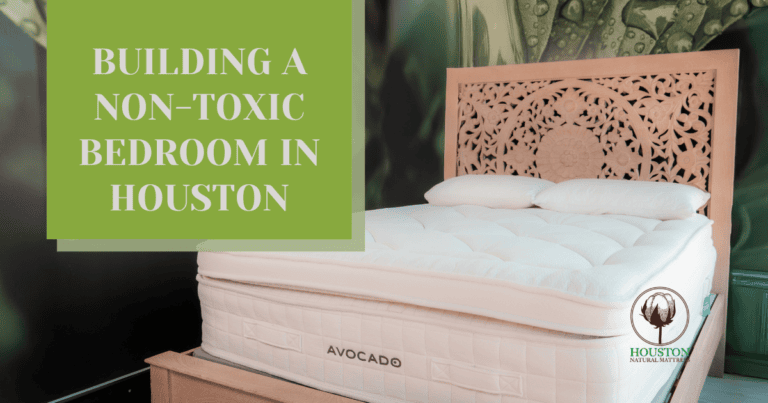
- Avocado Green Mattress: organic hybrid (cool + buoyant)
- Naturepedic EOS Series: customizable organic support
- Naturepedic Halcyon (Arcadia / Elysium): modular organic luxury
- Posh + Lavish: modern Talalay latex luxury
Quick benefits: Local Delivery • Old Mattress Haul-Away • Comfort Exchange (ask us for details)
Ready to try? Book a 20-Minute Sleep Fitting · Call Now
Why memory foam underperforms in Houston (it’s what’s inside that counts)
We’ll be plain: in our heat and humidity, dense memory foam is the wrong tool for most sleepers.
- Holds heat and humidity. It softens with body heat and tends to keep that warmth and moisture, clammy on muggy nights.
- “Stuck” feeling. Slow rebound makes position changes feel like work at 2 a.m.
- Odor & chemical emissions risk. Polyurethane foams and adhesives can off-gas VOCs, and higher temperatures and humidity increase emissions (Frontiers in Built Environment review).
- Impressions over time. Lower-density foams flatten faster at the hips and shoulders.
- Fire tests = hidden layers. To pass flammability standards, many foam mattresses use fiberglass sleeves inside the factory cover or other barrier systems; some models (especially older or cheaper builds) have used added flame-retardant chemicals. Look for “fiberglass-free” and “no added flame retardants.” (Background: CPSC FAQ; CA AB-2998 FAQ.)
Important: never remove a mattress cover that says “Do Not Remove.” That label often indicates a fiberglass barrier inside. Keep it closed and use a washable, breathable mattress protector on top.
Materials your skin actually enjoys
Luxury isn’t glossy; it’s effortless comfort. In Gulf-coast humidity, choose breathable fibers and light layers:
- Sheets: percale cotton for that cool hotel hand, or linen if you run warm (it softens beautifully).
- Top layer: a light cotton or wool blanket to move moisture without trapping heat.
- Mattress protector: a breathable cotton protector with a thin waterproof layer (often TPU), not vinyl/PVC. (What to look for: chemical-free mattress covers guide.)
- Pillow protector: zip-on protectors keep pillows cleaner and reduce allergen buildup. (More detail: allergy cover guide.)
Laundry that’s skin-kind: Use fragrance-free detergent; skip fabric softener. If you miss softness, add ¼–½ cup distilled white vinegar in the rinse to break down leftover detergent.
Nightstand provisions (stay asleep by staying put)
Staying asleep is easier when you don’t leave the room.
- Insulated tumbler with a lid, fill with ice water before bed so you never make a kitchen run (and never face bright light).
- Quiet mini-fridge if you need water, meds, or a light snack at night. Choose a model marketed quiet/silent (target ~30 dB), place it away from the headboard on rubber feet, leave a few inches for ventilation, and cover bright LEDs.
Allergen control that actually helps (painless routine)
- Sheets & pillowcases: weekly hot wash (≥130°F) + hot dry (Mayo Clinic).
- Protectors: wash mattress protector and pillow protectors monthly (or quarterly if you use a topper and keep surfaces clean).
- Pillows: replace every 1–2 years
- Vacuum & dust: HEPA vacuum floors/rugs; damp-dust so particles don’t float back up.
Visit us – feel the difference
We’ll help you map the right mattress feel, breathable layers, and finish for that calm, hotel-level bed—without the hotel bill.
Houston Natural Mattress
6111 Kirby Dr, Houston, TX 77005
Hours: Mon–Fri 10–7 • Sat 10–5 • Sun 12–6
Call: (832) 582-6324
Also read: Buyer Beware: How to Spot the Difference Between a Luxury Mattress and an Imposter
Sources (linked)
- Evening light & melatonin: Harvard Health, Blue light has a dark side
- Noise target: WHO, Guidelines for Community Noise (bedrooms ≈ 30 dB LAeq; keep night spikes ≲ 45 dB LAmax)
- Humidity guardrail: EPA, Brief Guide to Mold, Moisture and Your Home
- Weekly ≥130°F wash: Mayo Clinic—Dust mite allergy
- VOCs & climate: Frontiers in Built Environment, Temp & humidity increase VOC emissions
- Fire standards & barriers: CPSC, Mattress FAQs (16 CFR 1632/1633) and CA AB-2998 FAQ