
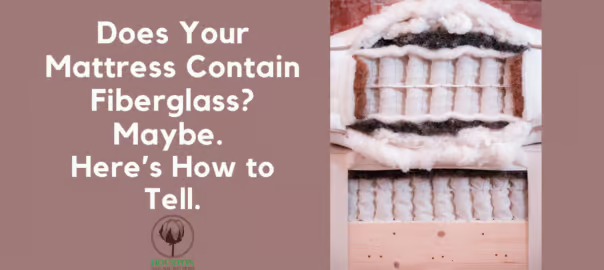
Most people have no idea what is inside their mattress. That is not a criticism. Mattress labels are confusing, and manufacturers are not eager to explain their materials in plain language. But if you own a foam mattress, especially one that shipped compressed in a box, there is a real chance it contains fiberglass.
Fiberglass is used in a large share of budget and mid-range mattresses as a fire barrier. It works. It is inexpensive. And under normal use, it stays hidden inside the mattress where you never notice it.
The problem starts when it gets out.
This article explains why fiberglass ends up in mattresses, how to find out if yours has it, what happens when it escapes, and what to look for in a mattress that does not use it.
Quick Answer: Do Mattresses Contain Fiberglass?
Some mattresses do contain fiberglass, especially inexpensive foam mattresses and many foreign-made or inexpensive bed-in-a-box models.
Manufacturers use fiberglass as a fire barrier to meet federal flammability standards. When the fiberglass layer remains sealed inside the mattress, it usually stays contained. Problems occur if the barrier is exposed, often when the outer cover is removed.
Higher-quality mattresses often use natural fire barriers such as wool instead of fiberglass.
The easiest way to find out whether your mattress contains fiberglass is to check the law tag, which lists the materials inside the mattress.
Every Mattress Has to Pass a Fire Test. Not Every Brand Uses the Same Materials to Do It.
Federal law requires all mattresses sold in the United States to resist ignition from an open flame. The standard is 16 CFR Part 1633, and every mattress manufacturer must meet it.
The law does not specify how.
That is where the choices diverge.
Wool
Wool is naturally flame-resistant. It does not need chemical treatment to pass the fire test and has been used safely in mattresses for decades.
Fiberglass
Fiberglass is a woven layer of fine glass fibers sewn into a sleeve that wraps around the foam core. It is much cheaper than wool and allows manufacturers to pass the fire test at a lower cost.
Chemical Flame Retardants
These are applied to foam or fabric or added during foam production. Many of these chemicals have raised long-term health concerns.
When a mattress brand does not disclose its fire barrier materials, it usually means the information was simply not volunteered.
Chemical Fire Retardants: The Other Issue Worth Understanding
Fiberglass gets attention because contamination stories are dramatic. People report fibers on furniture, itchy skin, and bedrooms that require professional cleaning.
Chemical flame retardants are a quieter concern, but they deserve attention as well.
For years, one of the most common groups of flame retardants used in foam products was polybrominated diphenyl ethers (PBDEs). These chemicals slowed ignition, but they were also found to accumulate in human tissue and disrupt hormone systems. Because of these risks, many PBDEs were phased out beginning in the mid-2000s.
Replacement chemicals have not solved the issue entirely. Some foam products still contain compounds such as TDCPP (chlorinated tris) and related organophosphate flame retardants, which are associated with potential thyroid disruption, neurotoxicity, and cancer.
Mattresses create a unique exposure situation. The average person spends roughly 2,500 hours each year in direct contact with their mattress. During sleep, body temperature rises and perspiration increases, which can change how the skin interacts with surrounding materials.
Certifications such as GREENGUARD Gold and MADE SAFE screen products for many of these chemicals. A mattress carrying both certifications has been independently evaluated to ensure those substances are not present in the product formulation.
A mattress without certifications has not gone through that screening.
What Happens When Fiberglass Gets Out
Under normal conditions, fiberglass stays sealed inside the mattress beneath the outer cover.
Problems begin when the cover is disturbed.
Many mattresses are sold with zippered covers that appear removable and washable. On mattresses that contain fiberglass fire barrier sleeves, removing the cover can release microscopic glass fibers into the room.
These fibers are extremely small. They can float in the air and settle on bedding, clothing, carpet, furniture, and other fabrics.
Once fiberglass spreads into soft materials, removing it can be difficult. The fibers do not dissolve and do not break down easily. Vacuuming without a HEPA filter can sometimes spread the particles rather than remove them. In more serious cases, professional cleaning may be required.
What Fiberglass Exposure Feels Like
Fiberglass particles are small enough to lodge in skin and irritate the respiratory tract.
Common symptoms include:
- itching and redness on exposed skin
- a crawling or prickling sensation often described as invisible splinters
- eye irritation and tearing
- coughing or throat irritation
- breathing discomfort, especially in people with asthma
Children and individuals with respiratory conditions are often more sensitive to these effects.
Fiberglass is not chemically toxic in the way some flame retardants are. The issue is mechanical irritation caused by tiny glass fibers embedding in skin or tissues.
How to Find Out If Your Mattress Has Fiberglass
There is no home test. But there are several things you can check.
Read the Law Tag
Every mattress sold in the United States has a law tag sewn into the product that lists the materials used inside.
Look for terms such as:
- glass fiber
- fiberglass
- glass wool
- fiberglass blend
If any of these appear, the mattress likely contains fiberglass as part of its fire barrier system.
Some fire barrier fabrics contain silica or mineral fibers that are not the same as fiberglass, so wording can matter. If the tag is unclear, check the manufacturer’s materials list.
Look for a “Do Not Remove Cover” Warning
Some mattresses with fiberglass include labels that say:
- do not remove cover
- inner cover must not be removed
- removal of cover voids warranty
These warnings are often present because removing the cover can expose the fiberglass barrier layer.
Search Your Brand and Model
Typing your mattress brand and model name together with the word fiberglass can reveal useful information. Consumer forums and product reviews have documented many models that use fiberglass barriers.
Fiberglass by Mattress Type: A Quick Reference
| Mattress Type | Fiberglass Likelihood |
|---|---|
| Memory foam / polyurethane foam | Common |
| Bed-in-a-box mattresses | Higher risk |
| Budget hybrid mattresses | Common when certifications are absent |
| Traditional innerspring | Moderate risk |
| Certified organic latex or wool mattresses | Not present |
| GOTS / GOLS certified mattresses | Not present |
Certification standards for organic mattresses prohibit fiberglass and chemical flame retardants.
What to Look for in a Mattress That Avoids Fiberglass
The safest approach is choosing a mattress that uses a natural fire barrier and independent certification.
Natural Fire Barriers
The most common natural fire barrier used in high-quality mattresses is wool. Wool fibers resist ignition naturally and can pass federal flammability standards without chemical treatment.
Some manufacturers also use rayon-based fire barrier fabrics infused with silica, which provide flame resistance without fiberglass particles.
None of the Products at Houston Natural Mattress Contain Fiberglass or Chemical Flame Retardants
Every product in the Houston Natural Mattress showroom is free of fiberglass and chemical flame retardants.
This includes mattresses, toppers, and bedding.
The store specializes in certified organic and natural sleep products with transparent material sourcing.
Brands available in the showroom include:
Naturepedic
Uses a GOTS-certified organic wool as its natural fire barrier. Certifications include GOTS, GOLS, OEKO-TEX Standard 100, GREENGUARD Gold, and MADE SAFE.
Avocado Green Mattress
Uses GOTS-certified organic wool as its natural fire barrier. Certifications include GOTS, GOLS, GREENGUARD Gold, and MADE SAFE.
Vispring
Handcrafted luxury mattresses made with natural materials such as wool, cotton, horsehair, and steel coils. No fiberglass fire barriers are used, only natural bio-based materials are used in their mattresses.
The Natural Mattress Home
Latex mattresses constructed with natural fibers and wool fire barriers instead of fiberglass.
Coyuchi
GOTS-certified organic bedding made with traceable organic cotton.
Sleep & Beyond
Organic wool and cotton bedding products carrying GOTS certification.
Certification documents for these brands are available for review before purchase.
Visit Houston Natural Mattress
Houston Natural Mattress offers the largest selection of certified organic mattresses and toppers in Houston.
If you have questions about fire barriers, certifications, or what is inside a mattress, the team can walk you through the materials used in each product.
Houston Natural Mattress
6111 Kirby Dr
Houston, TX 77005
Phone: (832) 582-6324
Website: https://houstonnaturalmattress.com

Amanda is a wellness-focused writer passionate about sustainable living and sleep science. She specializes in natural mattresses and eco-conscious bedding, exploring how healthier materials and mindful choices can transform the way we rest. With a graduate degree in Nursing from Vanderbilt University and professional membership in the American College of Lifestyle Medicine, Amanda strives to promote the pillars of restorative sleep and the avoidance of toxic substances. She empowers readers to make informed decisions that benefit both personal well-being and the planet. Outside of her research on organic sleep solutions, Amanda enjoys forest hikes, sipping herbal tea, and embracing minimalist design.