hnm mattress buying tips

5 Crucial Tips on What to Look for When Shopping for a Mattress

It is impossible to create an entire set of criteria for selecting the ideal mattress that will fulfill the distinct demands of every person. However, there are a few that no one should overlook. We’ve compiled a list of the most important and straightforward characteristics to look for while shopping for a mattress in-store and online.

The suggestions provided below might serve as a guide to assist you in narrowing your search and saving time when looking for the ideal mattress to meet your specific requirements and preferences. As a result of compiling this list, we want to alleviate some of the difficulties that customers often encounter while making this specific “grudge purchase.” The following suggestions may help to lift the veil on some of the mysteries surrounding the process of buying a mattress.

Tip 1: Certifications

Are they significant? In a nutshell, YES. However, be wary of deceptive certificates. Natural and organic mattresses that have earned certifications such as GOLS, GOTS, OEKO-TEX, and GREENGUARD GOLD are highly sought after. If a product is GREENGUARD Certified, it has been tested for various contaminants, including VOCs (Volatile Organic Compounds), phthalates, and formaldehyde, and confirmed to emit minimal amounts of chemicals. All certificates must be validated by independent third parties (laboratories/organizations). It is preferable if these certificates are readily available and accompanied by documentation.

Tip 2: Be Wary of Product Descriptions

There are many different foam manufacturing processes and formulas. However, the variety of raw materials available for use in today’s mattresses is limited, and the pool of industry suppliers from whom to pick is even poorer. Some general guidelines to follow while exploring this element are as follows:

  • When googling, you should be able to find the product name or foam type.
  • Searching for the product’s name should provide a plethora of retailers selling the same mattress.
  • A search for a particular foam layer should return a list of companies that utilize the same foam.

Most products that deal with hazards include safety features so that an injury can be prevented. These products should also contain warnings on the label.

Tip 3: Star Ratings

Websites have evolved into excellent tools in the form of star ratings. They give basic information on client satisfaction regarding a specific brand, product, or service. However, it is worth noting that almost all “mattress reviews” submitted by consumers are returned to mattress manufacturers within the first week or two of ownership. Is it possible to prove this assertion in the long run? A large number of favorable reviews is quite encouraging. On the one hand, most of these assessments are not based on years of usage or overall effectiveness. On the other hand, reviews could be incredibly useful in gaining a realistic idea of the brand’s return policy, delivery methods, general customer care, and commitment to supporting its consumers.

Tip 4: Find Out More About the Materials Used in Making the Mattresses

Many of the mattresses on the market today have the potential to harm you and your loved ones. For example, an interior cover constructed of fiberglass may discharge millions of fiberglass particles into the air. As a consequence, furniture, clothing, carpets, and toys, among other things, may get polluted, particularly if the fiberglass is sucked into your HVAC system. Fiberglass exposure may result in various ailments ranging from skin rashes and lacerations to upper respiratory infections and persistent breathing issues. The medical expenditures may be devastating for some families, especially if their home has also been flipped upside down due to fiberglass exposure. Hiring a professional team to remove fiberglass might cost up to $20,000.

Many popular mattresses are built of polyurethane foam derived from a petrochemical base and then mixed with a chemical concoction of stabilizers, catalysts, surfactants, fire retardants, antimicrobial agents, and dyes to create a chemical nightmare. These substances have been linked to environmental concerns and human health risks such as chronic bronchitis, reduced lung function, shortness of breath, nausea, vomiting, and allergic responses.

While selecting a comfortable mattress to sleep on is essential, you should also research the materials utilized to make the mattress. Most importantly, the best-made mattresses should be free of any dangerous elements or chemicals that may pose a threat to the health of you and your family.

Tip 5: Opt For a Concise and Clear Return Policy

A mattress’ return policy is one of the most important considerations when buying a new one. However, not every retailer has a good return policy, and many customers are unaware that they are putting their money at risk by buying from these shops. You must find a company that has a concise and transparent return policy. What exactly does this mean? First and foremost, they must have one. Second, they must provide you with sufficient time to test the mattress. Last but not least, the return policy must be reasonable. Unfortunately, there are firms out there who are just interested in making a fast buck at the expense of their customers’ experience.

At Houston Natural Mattress, we are proud to support businesses that promote safer goods and practices via advocacy, grassroots organization, and consumer involvement to secure a healthier future. That’s why our partnership with Environmental Litigation Group, P.C. is a perfect fit.

Environmental Litigation Group, P.C. is a law firm specializing in toxic exposure cases that initiated the Zinus Replacement Campaign with the goal of providing a new and safe mattress free of charge to as many affected families as possible. If you or someone you know has been affected by fiberglass exposure from their mattresses, fill out the form on the campaign page above, and you have your mattress replaced free of charge.

COVID19 Statement

covid

CoronaVirus (COVID19)

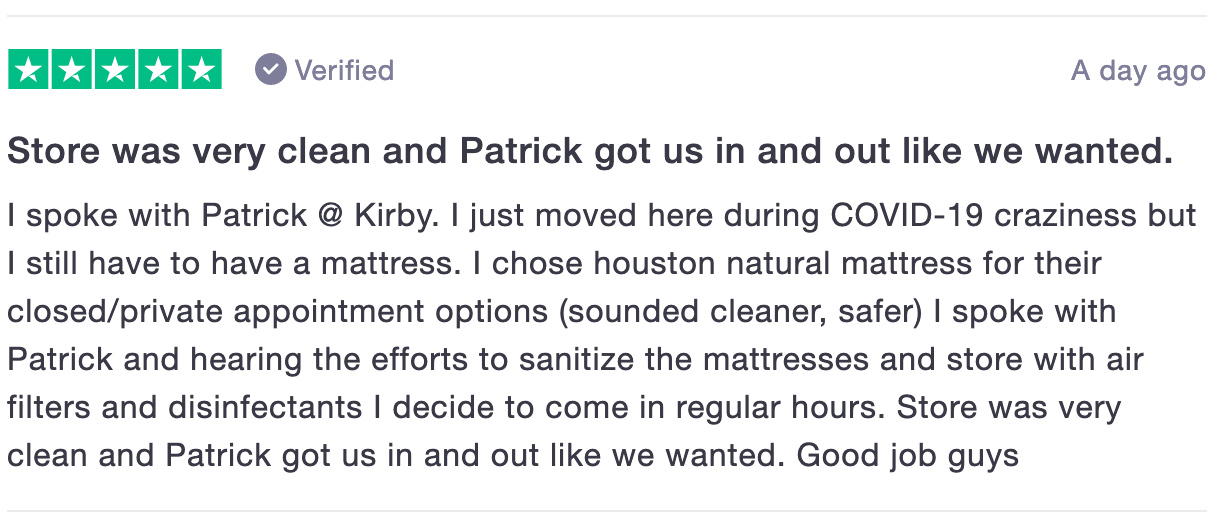
The Centers for Disease Control (CDC) has been closely monitoring the local and international progress of the CoronaVirus outbreak. We are following the CDC & The WHO (World Health Organization) closely, as well as local sources, so that we can help to protect our clients & staff throughout this situation. Here are the recommendations & precautionary methods we are following:

At our stores across Texas, we are following protocols to prevent transmission:

*All staff wash hands and use hand sanitizer between each customer.
*All mattresses are kept clean, and disposable and/or reusable/washed sheets are available for customers if requested. All hard surfaces, door handles, bathrooms, etc., are cleaned multiple times a day with disinfectant.
*Hand sanitizer is available in store to customers & staff alike.

Additionally, we have gone above & beyond these protocols by offering the following options:

*We have instituted a one on one appointment based option, for customers that want to avoid groups of people. This option is available via email on our websites, or simply call a store to schedule.
*We offer consultation by phone. This of course isn’t as comprehensive as actually trying out a mattress, but we offer a 100 day no questions ask sleep trial, so that you can rest easy in your decision.
*We offer online ordering of our mattresses & bedding, with the same 100 Night Sleep Guarantee.

You can help prevent the spread of any respiratory illness with these common sense precautions:

*Avoid close contact with people that are sick.
*Stay home when you are sick.
*If you are sick, call your medical provider/PCP before seeking medical care.
*Avoid touching your face.
*Wash hands often with soap & water for at least 20 seconds. This is best. If you don’t have access to soap & water, use an alcohol based hand sanitizer.
*Cover your cough & sneezes with a closed elbow or a tissue (best), and throw said tissue in trash.
*Clean & disinfect frequently touched surfaces & objects.

Thank You for supporting your local Texan family owned business.

Sleep Safety – Traditional vs Organic Mattresses

In 2007, the United States adopted new fire-retardant standards for mattresses. Traditional manufacturers are meeting these standards with sprayed on toxic chemicals that make your sleeping space more dangerous than restful. Compare the construction of an organic mattress to the traditional option, and you’re sure to see the compelling difference.

Traditional-vs-Organic-Mattresses

Please feel free to share this infographic. Our licensing requires that in doing so, you link back to this site. You can easily embed the infographic by copying and pasting the code below into a blog post or page.

Share this Infographic On Your Site

Posh + Lavish Luxury Mattresses

posh lavish luxury mattresses

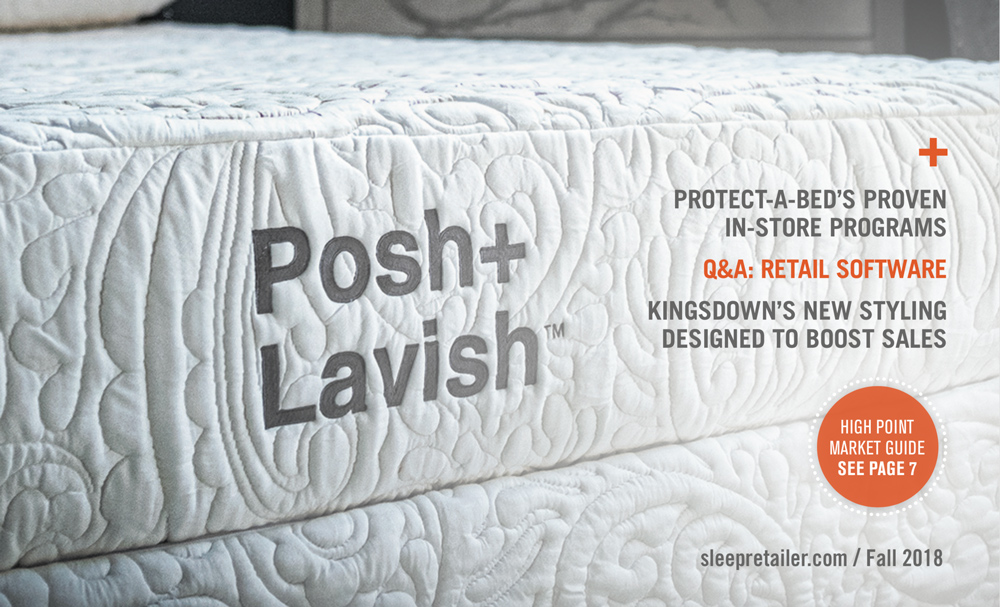
For retailers looking to revamp or build upon their sales strategies, Posh + Lavish has emerged as a uniquely high-end solution in a market that has become increasingly saturated with low-cost and copy-cat offerings. Rather than peddling convenience and affordability, it has invested to create luxury mattresses, made with natural materials, available only at brick-and-mortar retail. By coupling that with an unparalleled commitment to philanthropy, Posh + Lavish has built itself on a promise of integrity—and today, the company is providing retailers with a new route to success.

Read the full article here.

VOC Off Gassing from a Popular Brand Memory Foam Mattress

memfoamoffgas2 small

Off-gassing happens when chemicals evaporate from mattress adhesives, flame-barrier treatments, finishes, added fragrances, or petroleum oil–based foam and are released into the air. Independent screens of conventional memory-foam builds have reported compounds such as benzene and styrene (aromatics), 1,4-dioxane and 1,2-dichloropropane (chlorinated solvents), cyclic siloxanes (D4–D6), and fragrance terpenes like limonene/myrcene.

To choose a safer option, look for independent standards like OEKO-TEX® STANDARD 100 (oeko tex), GREENGUARD Gold (greenguard gold), and MADE SAFE® (madesafe) that limit or screen emissions and ingredients.

Below is a list of volatile/semi-volatile organic compounds encountered from a popular-brand memory-foam mattress (GC-MS screening; * indicates NIST/EPA/NIH best library match).

1,2,4- Methanoazulene, decahydro- Dodecane, 3-methyl
1,5,5,8a tetra methyl Heptylcyclohexane
1,2- Propanediol (Propylene glycol) Hexanal
1,4- Dioxane Hexasilxane, tetradecamethyl
1,6-Octadiene, 7-methyl-3- (8CI9CI)*
methylene (Myrcene) Limonene (Dipentene: 1-Methyl-4-
1-Butanol (N-Butyl alcohol) 1 methyllethyl cyclohexene)
1- Dodacene Longifolene
1- Hexanol, 2-ethyl Naphthalene
1-Propanol, 2-chloro* Naphthalene, decahydro-*
2- Butanol, 3-methyl Naphthalene, decahydro-2-methyl*
2-Pentanal, 2-methyl Pentasiloxane, dodecamethyl*
2-Propanol (Isopropanol) Phenol, 4-(1- methylpropYI)-*
2-Propanol, 1,3-diehloro- Pinene, a (2,6,6-Trimethyl-
2-Propanol, 1-(2-Dropenyloxy) bieyelo[3.1.1]hept-2-ene)
2-Propanol, 1-[1-methyl-2(2- Pinene, p (6,6-Dimethyl-2-meth-
propenyloxy) ethoxy* ylene bieyelo [3.1.1]heptane)
Azulene, 1,2,3,4,5,6,7,8-oetahydro- Propane,1,2,3-trichloro
1,4-dimethyl-7- 12.6(1- Propane, 1,2-dichloro
methyllethyllidene) Propanoic acid,2,2-dimethyl-, 2-
Benzaldehyde ethylhexyl ester*
Benzene, 1,2,4-trimethyl Silane, trichloro (chloromethyl)-*
Benzene, 1,3-diehloro Silanediol, dimethyl-*
Benzene, 1,4-diehloro Styrene
Benzene, 1-methyllethyl (Cumene) TXIB (2,2,4-Trimethyl-1,3-
Bicyclo [3.1.1] hept-2-ene-2-carbox- pentanediol diisobutyrate)
aldehyde Tetrasiloxane, decamethyl
Bicyclo [3.1.1] heptan-3-one,2,6,6- Toluene (Methylbenzene)
trimethyl-.1a,2b,5a* Trisiloxane, octamethyl*
Chlorobenzene Undecane
Cyclohexane,1,1-dimethyl-2- Undecane, 2,6-dimethyl
propyl* Undecane, 2-methyl
Cyclohexane, octyl* Xylene (para and/or meta)
Cyclohexasiloxane, dodcamethyl* c- Decahydronaphthalene
Cyclohexene, 1-methyl-4-( 1- Cyclopentasiloxane, deca-
methylethylidene)* methyl
Cyclotetrasiloxane, octamethyl Cyclotrisiloxane, hexamethyl
Decane, 3-methyl Decane, 5-methyl*
Dodecane

Indicates NIST/EPA/NIH best library match.

Several of these chemicals—such as benzene, styrene, naphthalene, and certain chlorinated propanes (e.g., 1,2-dichloropropane)—have been classified as carcinogenic or possibly carcinogenic by major health agencies.
Source: VOC measurements taken by gas chromatography with mass-spectrometric detection. From Sleep Safe in a Toxic World, Walter Bader, Freedom Press (2nd ed., 2011).