
Key Takeaway:
Wool is one of the most effective non-toxic comfort materials for Houston, TX’s heat and humidity. It manages moisture, provides natural cooling, and serves as a chemical-free fire barrier in many higher-quality builds. The real difference between wool mattresses is not the fiber itself but rather the construction: how much wool is used, whether it is batting or felt, and what is underneath it (latex, coils, or both). In Houston’s climate, many shoppers find that a well-built wool mattress feels cooler, less clammy, and more stable over time than foam-heavy mattress builds.
If you are shopping for a mattress in Houston, TX, you already know the problem: our heat and humidity is unforgiving with “average” materials. A mattress that feels fine in a cool showroom can turn into a warm, clammy mess at 2 a.m.
That is where wool earns its reputation. In a well-built, non-toxic mattress, wool is one of the most functional comfort materials you can sleep on – breathable, moisture-smart, and naturally resilient. The catch is that not all “wool mattresses” are built the same. The amount of wool, the type, where it sits, and what is underneath it matters.
About This Guide
Author: Amanda Demuth, MSN, RN | Houston Natural Mattress
Last updated: March 2026
Editorial note: Houston Natural Mattress focuses on materials-transparent mattress options. This guide is designed to help shoppers evaluate wool-rich builds using verifiable construction details rather than marketing language.
What a “Wool Mattress” Actually Means
A wool mattress uses wool as a meaningful comfort component – and often as a non-toxic fire barrier. Most of what you will see falls into one of these categories:
- All-wool or wool-dominant builds: thick, dense wool layers do the heavy lifting for surface comfort
- Wool over latex: wool quilted into the top panel with natural latex providing the support core
- Wool over coils: wool in the comfort layers above a pocketed coil support system
In practice, the sweet spot for many Houston sleepers is a non-toxic wool mattress paired with latex and/or coils – you will get pressure relief, cooling, and support without turning the surface into a heat trap.
Wool Types
- Virgin vs recycled wool: virgin wool generally holds loft more consistently; recycled blends can compress faster depending on processing.
- Batting vs felt: batting feels loftier and plusher; felt is denser and more structured.
- “Organic” vs “natural” wool: “Natural” is not a certification. If certified organic wool matters to you, ask what standard backs it and whether it applies to a component or the finished product. For a deeper look at what organic certifications actually verify, see our guide on how to choose an organic non-toxic mattress.
Fast in-store question: “Is the wool mostly batting or felt, and is it a thin quilt layer or a thicker comfort component?”
Why Wool Works for Cooling in Houston
Houston is hot and humid. Wool helps with cooling because it can:
- Balance insulation and breathability so your temperature stays more stable overnight
- Manage moisture vapor so the surface feels drier, a meaningful advantage in Houston’s humidity
The result is a sleep surface that stays more open and less stuffy than most synthetic foam-heavy quilt packages.
Why Synthetic Foams Trap Heat
To understand why a wool mattress sleeps cooler, it helps to understand why synthetic foam mattresses often do not. The cooling difference is structural.
Most synthetic mattress foams – polyurethane, memory foam, and their variants – are made from petroleum-oil-based polymers. At the molecular level, these materials form a dense, closed-cell structure. That structure is what creates the slow-sink, body-contouring feel that foam is known for, but it is also what traps heat:
- Closed-cell structure limits airflow. Unlike open-fiber materials such as wool or latex, synthetic foam cells are largely sealed. Air cannot circulate through the material the way it moves through wool’s natural crimp and loft. The result is a comfort layer that absorbs your body heat and holds it in place rather than dispersing it.
- Foam conforms tightly, reducing surface ventilation. When memory foam softens under body heat and pressure, it cradles you closely. That close contact eliminates the small air gaps that naturally occur with fiber-based comfort layers. Less air movement at the surface means more heat retention against your skin.
- Gel infusions and phase-change materials have limits. Some foam mattresses market cooling gel beads or phase-change covers as a solution. These materials can absorb heat temporarily, but once saturated – usually within 20 to 40 minutes – they reach thermal equilibrium and stop pulling heat away. Wool manages moisture and temperature passively and continuously throughout the night, which is why many sleepers in Houston find it more effective.
The bottom line: foam traps heat because of what it is made of and how it is built. Wool, by contrast, is an open, breathable fiber that wicks moisture away from the body and releases heat rather than holding it. For Houstonites dealing with warm, humid nights, the difference can be dramatic.
Wool as a Natural Fire Barrier
All mattresses sold in the U.S. have to meet flammability requirements. Many conventional beds use chemical flame retardants or fiberglass-style barriers to meet these standards. For a deeper overview of fire barriers and common materials used to meet flammability requirements, see our resource on flame retardants in non-organic mattresses.
Wool is naturally flame resistant and tends to char rather than melt or drip. In many natural and luxury builds, it can serve as the primary fire barrier – often helping shoppers avoid harmful chemicals or fiberglass barriers. This is one of the many reasons why wool is often featured prominently in certified organic mattress construction.
What to confirm when mattress shopping: the exact fire barrier used in the mattress you are buying.
How Wool Feels
Wool comfort is different from memory foam:
- Cushioned but not “stuck”: it softens under you without that slow-sink feel
- Great over latex: latex gives buoyant lift and support; wool adds a breathable, pressure-smoothing surface
Remember: Wool is surface plushness; latex/coils do the structural support.
How to Shop for a Wool Mattress in Houston, TX
Ask direct questions that cut through marketing. If you are not sure what greenwashing is in the mattress industry, start there—then bring these questions into the showroom:
- How much wool is used, and where (quilt panel only vs deeper comfort layers)?
- Is it batting or felt?
- What is the fire barrier (wool-only or a combination)?
- What is underneath the wool – latex, coils, or both?
- What does the warranty say about body impressions (threshold + measuring method)?
Trying wool-rich and latex builds side by side will quickly show you how different they feel from conventional foam beds.
Frequently Asked Questions
Where can I shop for a wool mattress in Houston?
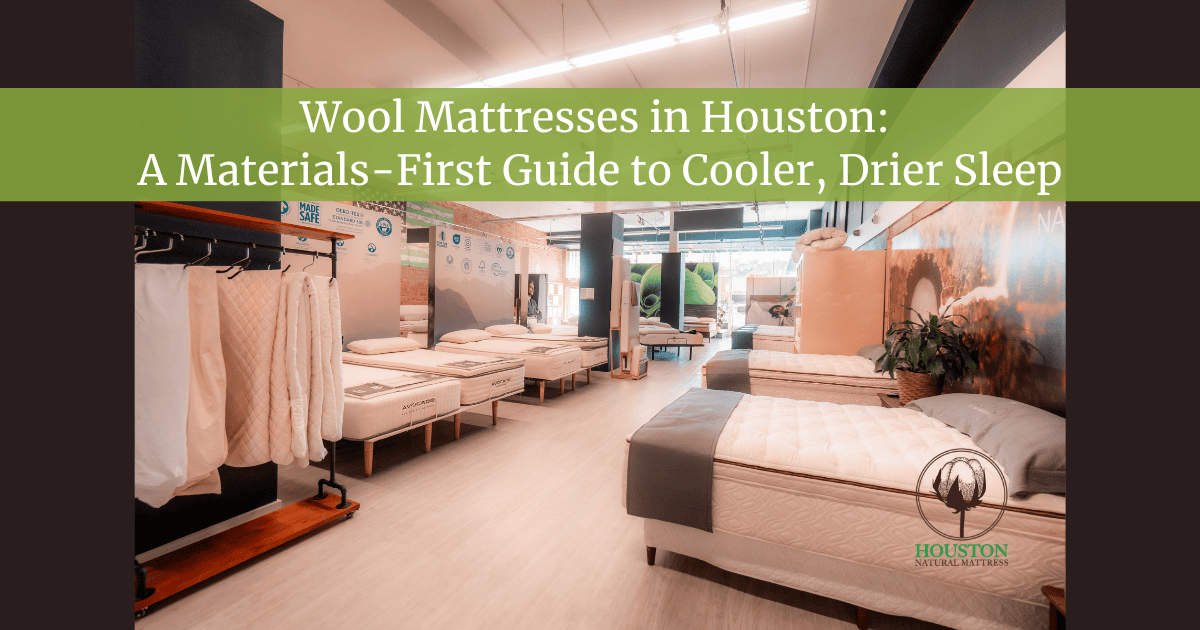
If you want to compare wool-rich builds the right way, the most efficient path is to test them in person. At Houston Natural Mattress, you can compare wool-quilted latex and wool-hybrid designs side by side and ask direct questions about wool content, the fire barrier, and what is underneath the wool. Bring your primary sleep position and give each bed 10–15 minutes.
Wool mattress vs memory foam: which is the better cooling mattress?
Many Houston, TX sleepers find a wool mattress feels cooler and less “stuffy” than memory foam because wool is more breathable and better at moisture management. As previously mentioned, synthetic foams trap heat due to their closed-cell structure and tight body conformity. Wool provides passive, continuous cooling rather than relying on gels or phase-change treatments that saturate within minutes.
Do non-toxic wool mattresses contain fiberglass?
Most non-toxic wool mattresses use wool as the primary fire barrier. Still, you should confirm the fire barrier used in the exact model you are buying. If shopping at Houston Natural Mattress you can rest assured knowing that we do not carry any mattresses that contain chemical fire retardants or fiberglass.
Wool over latex vs wool over coils: what is the difference?
Wool over latex typically feels more buoyant and responsive. Wool over coils can feel a bit springier with strong airflow through the support core. Both can work well – the best choice comes down to firmness preference and overall build quality.
Can I add wool to my existing mattress?
Yes. A wool mattress topper can add moisture-wicking, cooling comfort to your current bed. It is not a replacement for a full non-toxic wool mattress, but it is a meaningful upgrade – especially in Houston, TX’s humidity.
Visit Our Houston Showroom
In our Houston showroom, wool often shows up in its more premium forms – certified organic wool, British wool, and in some ultra-luxury builds, comfort packages that include cashmere and alpaca.
If you are comparing wool-rich, latex, and hybrid mattresses, we can help you look past the mattress marketing buzzwords and focus on what matters: where the fibers are used, what is underneath them, and how the mattress is actually built.
Houston Natural Mattress
6111 Kirby Dr, Houston, TX 77005
(832) 582-6324
houstonnaturalmattress.com
Monday–Friday: 10am–7pm | Saturday: 10am-5pm | Sunday: 12pm–6pm
Serving the Greater Houston Metro, including the Heights, Rice Village, River Oaks, Memorial, West University, Bellaire, and surrounding communities. White-glove delivery and setup available throughout the Greater Houston Metro.

Amanda is a wellness-focused writer passionate about sustainable living and sleep science. She specializes in natural mattresses and eco-conscious bedding, exploring how healthier materials and mindful choices can transform the way we rest. With a graduate degree in Nursing from Vanderbilt University and professional membership in the American College of Lifestyle Medicine, Amanda strives to promote the pillars of restorative sleep and the avoidance of toxic substances. She empowers readers to make informed decisions that benefit both personal well-being and the planet. Outside of her research on organic sleep solutions, Amanda enjoys forest hikes, sipping herbal tea, and embracing minimalist design.