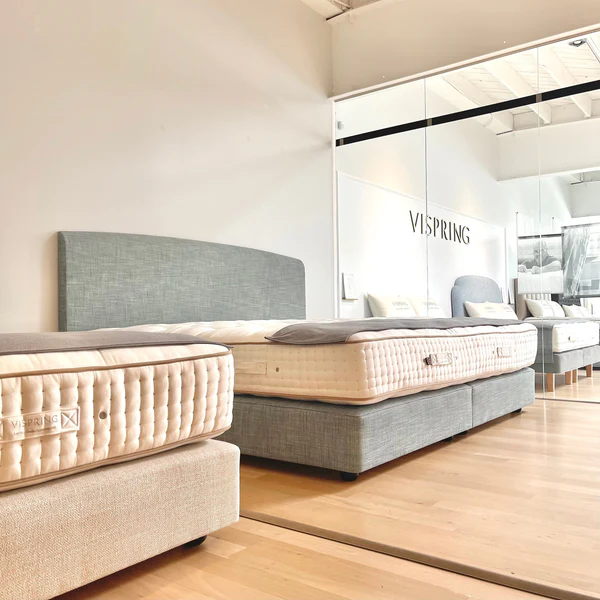
End Sleep Divorce by Starting with your Bed

Sleep Divorce Is a Mattress Problem: 7 Ways Houston Couples Can Share a Bed Again

More than one in three American couples now sleep in separate beds at least some of the time. The American Academy of Sleep Medicine reported that figure in 2023, and the trend has only grown since. The phrase for it, “sleep divorce,” sounds clinical and dramatic. The reality is usually quieter: one partner drifts to the guest room. Then it becomes a habit. Then neither of you mentions it anymore.

Sleep divorce is presented in most media coverage as a relationship decision. It is not. In the overwhelming majority of cases, it is a mattress and sleep environment problem that couples are solving in the most expensive, least effective way possible: by duplicating an entire bedroom instead of fixing the one they have.

The causes are predictable and well-documented: temperature disagreements, firmness incompatibility, motion transfer, snoring, and blanket conflict. Every one of these has a materials-level or equipment-level solution that is less disruptive, less expensive, and more effective than sleeping apart. This guide covers the seven that work, explains the materials science behind each one, and connects them to the specific climate challenges that Houston couples face.

Why This Is Worse in Houston

Houston does not get enough credit for how much it complicates shared sleep. The city’s climate creates conditions that amplify every common sleep compatibility issue.

Temperature disagreements intensify. When your bedroom environment is already warm and humid for five or more months of the year, the partner who “runs hot” is not imagining it. A mattress that traps heat – polyurethane foam, memory foam, synthetic quilting – makes the problem measurably worse. The hot partner sleeps poorly. The cold partner cranks the air conditioning. Both wake up tired and frustrated.

Moisture compounds everything. Houston humidity means more perspiration during sleep, which means more moisture in the mattress surface. Synthetic covers and polyester fiber fill absorb and retain that moisture differently than organic cotton and wool. A mattress surface that handles moisture well keeps both partners drier and more comfortable. One that does not create a damp, warm microclimate that disrupts sleep for both people – even the one who “never notices.”

1. Split Firmness: Different Comfort on Each Side

The single most common driver of sleep incompatibility is firmness preference. One partner wants firm support. The other wants softer pressure relief. In a conventional mattress, someone compromises. The compromise is usually “medium,” which means neither person gets what they need and both sleep worse than they would on a mattress matched to their body.

Split firmness mattresses solve this by allowing each side of the bed to have a different comfort configuration. Externally it’s just one mattress, but internally it’s two halves. The two halves share the same frame, the same sheets, and the same bed. But the internal construction on each side is tuned independently.

How it works in practice. Naturepedic’s EOS series is a strong example. Each side of the mattress can be configured with different latex comfort layers – softer on one side, firmer on the other. The layers are swappable, which means if your preference changes over time (or if the person on the soft side decides they want more support), you reconfigure the layers rather than replacing the mattress. This extends the useful life of the product and eliminates the “one of us settled” dynamic entirely.

For Houston couples specifically, the Naturepedic EOS uses GOLS-certified organic Dunlop latex, GOTS-certified organic wool, and GOTS-certified organic cotton. These materials are inherently breathable and moisture-wicking, which means the split firmness solution also addresses the temperature problem simultaneously.

2. Split Head Adjustable Base: Independent Positioning

A split head adjustable base allows each partner to raise or lower the head of their side of the bed independently. The base is a single unit that fits a standard king frame, but each half articulates separately.

This solves several problems at once.

Snoring and airway obstruction. Elevating the head of bed by even 15 to 30 degrees opens the upper airway and reduces the gravitational collapse of soft tissue that causes most positional snoring. For the partner who snores, this is a simple mechanical intervention that often reduces snoring significantly without devices, mouth tape, or surgery. For the partner who lies awake listening to snoring, it means they stop losing sleep over a problem that has a straightforward physical solution.

Acid reflux and GERD. The American College of Gastroenterology recommends elevating the head of bed for patients with nighttime gastroesophageal reflux. An adjustable base provides this elevation without the instability of wedge pillows, which tend to shift during the night.

Reading, device use, and different schedules. If one partner reads or watches something before sleep while the other is already trying to fall asleep, independent head elevation means the reading partner can sit up comfortably without disrupting the sleeping partner’s flat position.

The key specification to ask about is whether the base is truly split-head (each side articulates independently) or whether both sides move together. Both types exist at similar price points. For sleep divorce prevention, you need independent movement.

3. Head Elevation for Snoring: The Simplest Intervention That Works

Snoring is cited as the number one reason couples begin sleeping apart. And for many couples, it is the catalyst that turns a temporary arrangement into a permanent one. The partner who snores feels guilty. The partner who cannot sleep feels resentful. Both avoid the conversation.

The physiology is straightforward. When you lie flat on your back, gravity pulls the soft palate, the base of the tongue, and surrounding tissues toward the back of the throat. This narrows the airway. Air passing through a narrowed airway vibrates the relaxed tissue, producing the sound of snoring. Elevating the head changes the angle of the airway and reduces the gravitational effect on these tissues.

This is not a cure for all snoring. Obstructive sleep apnea requires medical evaluation and treatment. But for positional snoring – the kind that is worst when lying flat on the back – head elevation is one of the most studied and most effective non-medical interventions available.

A split head adjustable base is the most stable way to achieve this elevation. Unlike wedge pillows, which shift during the night and can create neck strain, an adjustable base elevates the entire upper body in a consistent position. The sleeping partner’s side stays flat. The snoring partner’s side is elevated. Both sleep better.

If snoring is the reason you or your partner left the bedroom, this is the first thing to try before accepting sleep divorce as permanent. The cost of an adjustable base is a fraction of the cost of furnishing a second bedroom – and it addresses the root cause rather than the symptom.

4. The Scandinavian Sleep Method: Two Duvets, One Bed

In Denmark, Norway, Sweden, and much of Northern Europe, couples share a bed but sleep under separate duvets. This has been standard practice for generations. Americans discovered it on social media around 2023, gave it a name, and have been slowly adopting it since.

The concept is simple. Replace one king-size comforter with two twin-size duvets. Each person controls their own temperature, their own covers, and their own tuck-and-wrap preferences. There is no blanket tug of war at 2 AM. There is no waking up cold because your partner rolled the comforter to their side. Each person sleeps in their own microclimate.

Why this matters in Houston specifically. Temperature disagreements between partners are the second most common driver of sleep divorce, after snoring. In Houston’s climate, these disagreements are more pronounced because the baseline environment is already warm. One partner may want a lightweight, breathable covering. The other may want something substantial. With two separate duvets, both can have exactly what they need without negotiation.

Materials matter here too. An organic wool duvet regulates temperature in both directions – it insulates when cool and wicks moisture when warm. Organic cotton is breathable and lightweight. For the Houston partner who runs hot, a lightweight organic cotton duvet or coverlet may be all they need. For the partner who wants warmth despite the air conditioning, an organic wool duvet provides it without the synthetic heat trap of polyester fill. Coyuchi, one of the bedding brands we carry, offers both organic cotton and organic wool options in twin sizes that work well for this setup.

The Scandinavian method costs almost nothing to implement. Two twin duvets. That is the entire investment. If blanket conflict is contributing to your sleep divorce, this is the lowest-cost, lowest-risk solution available.

5. Motion Isolation: Stop Feeling Every Movement

If one partner is a restless sleeper – frequent position changes, getting up during the night, tossing and turning – the other partner feels it. In a mattress with poor motion isolation, every movement transmits across the sleep surface. Over time, the partner who is repeatedly awakened begins to dread sharing the bed.

Motion isolation is a function of mattress construction, not marketing language. The materials that isolate motion best are pocketed coils (each coil moves independently inside its own fabric pocket, so compression on one side does not transfer to the other) and latex (natural latex absorbs and dampens movement rather than transmitting it). Continuous coil systems and thin foam layers over rigid bases perform worst for motion isolation.

For Houston couples, the combination of pocketed coils with natural latex comfort layers offers both motion isolation and airflow – the coil unit circulates air while the latex absorbs movement. This is the construction used in several models from Avocado and Naturepedic.

If motion transfer is your primary issue, lie on the mattress together in the showroom. Have one partner move while the other lies still. You will feel the difference between a well-isolated build and a poorly-isolated one immediately. This is one of the few sleep divorce issues that can be diagnosed in under 30 seconds.

6. Temperature-Regulating Materials: Solve the Hot/Cold Divide

The “I’m too hot, you’re too cold” conflict is pervasive, and in Houston it is amplified by the climate. The conventional solution – arguing over the thermostat – does not work because the problem is not room temperature. It is surface temperature. What the mattress does with your body heat and moisture at the sleep surface determines whether you feel cool, neutral, or overheated.

Materials that regulate temperature well: Natural latex (open-cell structure promotes airflow), organic wool (wicks moisture and buffers temperature in both directions), organic cotton (breathable, moisture-absorbent), and Tencel/lyocell (exceptional moisture management). These materials manage the microclimate between your body and the mattress without requiring electricity, fans, or cooling gels.

Materials that trap heat: Polyurethane foam (closed-cell structure restricts airflow), memory foam (heat-activated, meaning it softens in response to body heat and retains it), polyester fiber fill (does not wick moisture effectively), and synthetic covers. “Cooling gel” infusions can reduce initial contact temperature but do not change the fundamental thermal behavior of the foam over a full night.

When one partner runs hot in a Houston summer, the mattress materials are either helping or making it worse. There is no neutral. A mattress built around natural latex, wool, and cotton starts from a cooler, drier baseline than a mattress built around polyurethane foam and synthetic quilting. The hot partner feels cooler. The cold partner, sleeping under their own duvet (Scandinavian method), feels comfortable. Both stay in the same bed.

7. Right-Size the Bed: Give Yourselves Room

This one is simple and often overlooked. A queen mattress is 60 inches wide. Divided between two adults, that is 30 inches per person – less personal space than a twin bed. If either partner is larger, moves during sleep, or simply needs more room, a queen is insufficient for two people to sleep well together.

A king mattress is 76 inches wide – 38 inches per person. A California king is 72 inches wide but 84 inches long, which works better for taller couples. The difference between 30 inches per person and 38 inches per person is significant. Many couples who think they have a compatibility problem actually have a space problem.

If you are currently in sleep divorce on a queen mattress, upgrading to a king – combined with the right materials, the right bedding and an adjustable base – may be the right move. The additional space reduces motion transfer, reduces temperature conflict (more surface area dissipates heat), and gives both partners room to find their comfortable position without encroaching on each other.

What Sleep Divorce Actually Costs

The conversation around sleep divorce rarely includes the practical cost comparison. When one partner moves to a guest room permanently, the household absorbs the cost of a second mattress, a second set of bedding, additional climate control for a second bedroom, and the ongoing energy cost of cooling two sleeping spaces in a Houston summer.

A properly configured shared sleep system – a king mattress with split firmness, a split head adjustable base, and two sets of temperature-appropriate bedding – is typically less expensive than furnishing and maintaining a second bedroom. And it keeps both partners in the same room, which preserves the intimacy, connection, and physical proximity that most couples value.

Sleep divorce is not free. It trades one problem (poor shared sleep) for another (physical and emotional distance). The seven solutions above address the root causes at the source – the mattress, the base, and the bedding – rather than treating the symptom by moving to another room.

How to Start the Conversation

If you are currently in a sleep divorce, or heading toward one, the most productive next step is to identify which specific issue or issues is driving the separation. It is almost always one of five things: firmness disagreement, snoring, temperature conflict, motion transfer, or blanket conflict. Once you name the specific problem, the solution becomes concrete rather than abstract.

Come into the showroom together. Lie on the mattresses at the same time. Test the adjustable bases. Discuss what you each need. The right sleep system is not a compromise where both of you settle. It is a configuration where both of you get what you need.

FAQ: Sleep Divorce Solutions

Q: What is sleep divorce?

A: Sleep divorce is when couples choose to sleep in separate beds or separate rooms, usually because of sleep compatibility issues like snoring, temperature disagreements, firmness preferences, motion transfer, or blanket conflict. According to the American Academy of Sleep Medicine, more than one in three American adults report sleeping apart from their partner at least some of the time. Despite the name, it is typically a sleep environment problem, not a relationship problem.

Q: Does elevating the head of bed really help with snoring?

A: For positional snoring, yes. Elevating the head by 15 to 30 degrees changes the angle of the upper airway and reduces the gravitational effect on the soft tissues that cause snoring. A split head adjustable base is the most stable way to achieve this. Wedge pillows shift during the night and can create neck strain. If snoring is severe, persistent, or accompanied by gasping or pauses in breathing, medical evaluation for obstructive sleep apnea is recommended.

Q: What is the Scandinavian sleep method?

A: The Scandinavian sleep method replaces one shared king-size comforter with two twin-size duvets. Each partner controls their own temperature, weight, and coverage. It is standard practice in Denmark, Norway, Sweden, Iceland, and Germany. For Houston couples, this is particularly effective because it allows each partner to choose bedding weight appropriate for their temperature preference without affecting the other person. Organic wool and organic cotton duvets work well for this setup.

Q: Can one mattress really work for two different firmness preferences?

A: Yes. Split firmness mattresses like the Naturepedic EOS allow each side to be configured independently with different comfort layers. Both sides share the same base and the same sheets, but the internal construction is different. The layers are swappable, so preferences can be adjusted over time without replacing the entire mattress.

Q: Is it better to buy two twin mattresses or one split-firmness king?

A: A split-firmness king is generally preferable because it eliminates the gap between two twin mattresses, uses standard king sheets, and looks and functions like a single bed. Two twin mattresses pushed together can work but tend to drift apart over time and create an uncomfortable ridge in the center but still remains a viable option.

Q: How much does it cost to fix sleep divorce vs. maintain two bedrooms?

A: A quality king mattress with split firmness, a split head adjustable base, and two sets of appropriate bedding is typically less expensive than furnishing a second bedroom with a comparable mattress, frame, bedding, and the ongoing energy cost of climate-controlling a second sleeping space. In Houston, where air conditioning costs are significant, the energy savings alone can be meaningful over several years.

About Houston Natural Mattress

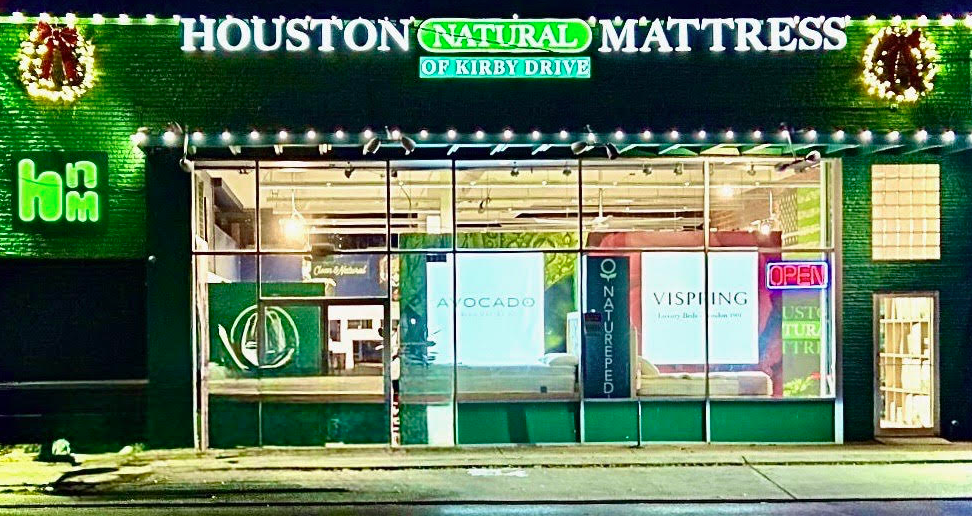
Houston Natural Mattress serves the Greater Houston Metro with certified organic and natural sleep products, carrying Naturepedic, Avocado, Vispring, and The Natural Mattress Home. We also carry organic bedding from Coyuchi, Naturepedic, Avocado, and Sleep & Beyond. Located in the heart of Rice Village, we offer white-glove delivery throughout the Greater Houston Metro.

If you are in a sleep divorce – or heading toward one – come in together. We will help you identify which specific issue is driving the separation and configure a sleep system that keeps both of you in the same room.

Houston Natural Mattress
6111 Kirby Dr
Houston, TX 77005
(832) 582-6324
houstonnaturalmattress.com

Monday–Friday: 10am–7pm
Saturday: 10am-5pm
Sunday: 12pm–6pm
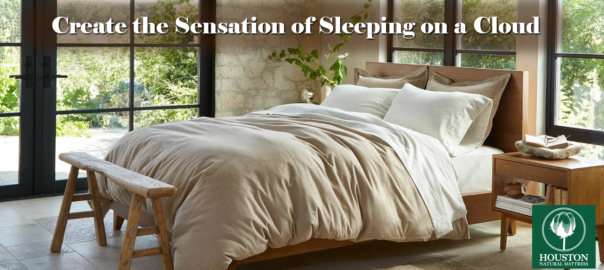
Create The Sensation of Sleeping on a Cloud | Houston Natural Mattress

The Ultimate Guide to Building a Cloud-Like Bed in Houston, TX

A Layer-by-Layer Guide to Softer, More Comforting Sleep

After a long, hot day in Houston, work that runs late, errands that stack up, and time spent in stop-and-go traffic, most people are not looking for perfection. They are looking for one clear moment of relief: a bed that feels calm the moment they finally lie down.

A cloud-like bed is not one product. It is a system: a soft-responsive foundation, a breathable plush layer, and textiles that feel genuinely soft while managing heat and humidity. When those pieces work together, the bed stops feeling like furniture and starts feeling restorative.

This guide walks through each layer in the order it should be built, with materials chosen for comfort, airflow, and long-term performance in Houston’s climate.

Quick Summary

A cloud-like bed comes from layering the right materials in the right order, softness that stays breathable, and support that does not collapse. In Houston, that means prioritizing airflow, moisture management, and responsive materials over heat-trapping builds. (This article covers all seven layers.)

This setup is ideal if you like a soft, enveloping feel but tend to overheat on typical memory foam or heavy comforters; if you prefer an ultra-firm, minimal bed, use this as inspiration rather than a strict formula.

The layers covered in this guide:

  • Mattress: Natural latex for buoyant, breathable support
  • Topper: Alpaca, down, or wool for plush cushioning without heat retention
  • Sheets: Organic cotton sateen for a soft, smooth hand feel
  • Blanket: Muslin or or matelasse organic cotton for lightweight, breathable warmth
  • Duvet insert: Down in the right weight for your climate (low-fill for Houston)
  • Duvet cover: Linen for moisture-handling and temperature regulation
  • Pillows: Adjustable shredded latex or down for alignment and comfort
  • Euro pillows: Down & feather inserts for back support and a finished look

Best Mattress for a Cloud-Like Feel: Why Latex Works in Houston

The mattress determines everything. A surface that is too firm can create pressure points at the shoulders and hips. Too soft, and the spine can fall out of alignment, leaving you stiff and unrested. Cloud-like comfort requires a material that is both plush and responsive, one that yields to the body’s curves while still keeping you level.

For many sleepers, natural latex is an excellent match for that “plush but supported” feel. Compared with many dense memory foams, latex tends to respond more quickly to movement and can feel more buoyant, which is why many people describe it as floating rather than sinking.

Sleep on a Cloud | Houston Natural Mattress

In Houston’s heat and humidity, breathability is not a bonus feature; it is essential for comfort. Latex comfort layers are often chosen because they allow airflow and recover quickly night after night without developing the same stuck, heat-loaded feel many sleepers notice with denser foams. Fire barrier materials vary by mattress; a trustworthy retailer should be able to explain what is used and why. Chemical-free is always preferable.

Our recommendation: The Cielo Latex Mattress

Chosen for a buoyant, pressure-relieving feel that stays responsive and does not rely on heat-trapping foam to feel plush.

Best Floating on Air Mattress Topper: Natural Fiber Options

sleeponacloud houstonnaturalmattress

Even the right mattress can benefit from an additional layer of cushioning, especially if the goal is that gentle, held feeling. A quality mattress topper can smooth remaining pressure points and add the degree of plushness that makes a bed feel genuinely restorative.

Breathable natural fibers such as down, wool, and latex are often chosen here because they add plushness while handling moisture and temperature swings better than synthetic products and give you the floating sensation that is markedly different from the sinking sensation that memory foam delivers. For Houston sleepers concerned about overheating at night, wool and natural latex are often favored because they feel light and breathable without the heavy, puffy warmth some people associate with thicker or synthetic fills.

Our recommendation: Sleep & Beyond myWoolly Latex Topper

Plush, breathable cushioning that adds softness without the “sleeping hot” feel. This is a natural fiber topper that will regulate your body temperature to keep you sleeping soundly, not waking up overheated. 

Softest Organic Sheets: Cotton Sateen for Cloud-Like Comfort

Sleep on a Cloud | Houston Natural Mattress

Sheets are the first thing your body encounters when you get into bed. They should feel gentle: soft enough to register as luxurious, smooth enough to reduce friction and irritation against the skin.

For a cloud-like hand feel, organic cotton sateen is a strong option. The sateen weave floats more threads on the surface, creating a smooth, buttery texture that feels noticeably softer than percale. When made from certified organic cotton, these sheets also avoid harsh finishing processes that can matter to sensitive sleepers and get softer with every wash..

Our recommendation: Coyuchi Cloud-Soft Organic Sateen
(Build the set yourself, or we also sell it as a set)

Fitted Sheet:
https://www.houstonnaturalmattress.com/product/coyuchi-cloud-soft-organic-sateen-fitted-sheet/

Flat Sheet:
https://www.houstonnaturalmattress.com/product/coyuchi-cloud-soft-organic-sateen-flat-sheet/

Pillowcase Set:
https://www.houstonnaturalmattress.com/product/coyuchi-cloud-soft-organic-sateen-pillowcase-set-2/

Lightweight Blanket for Houston Weather: Plush Cotton Muslin

Sleep on a Cloud | Houston Natural Mattress

Between the sheet and the duvet lies an opportunity many people overlook: a lightweight blanket that adds warmth without weight, comfort without bulk. This transitional layer adds flexibility. It is something to pull up on cool nights, or something to use alone when a duvet feels like too much.

In Houston’s climate, breathable cotton in a looser weave tends to work well because it drapes easily and feels cozy without trapping humidity. Muslin is particularly effective because its open weave allows air to circulate while still providing comfort.

Our recommendation: Naturepedic Breathable Muslin Blankets

Best Down Comforter for Warm Climates: Choosing the Right Weight

A common mistake is choosing a duvet insert that is too heavy for the climate. The result is not cloud-like. It is stifling. Many people in Houston end up kicking off their comforter in the middle of the night because they chose a winter-weight insert meant for colder regions.

Sleep on a Cloud | Houston Natural Mattress

A high-quality down insert can deliver an airy loft, especially when you choose the right weight for your room temperature and how warm you sleep. For most Houston bedrooms, lightweight or all-season weights are the safer starting point.

Our recommendation: Naturepedic Lightweight Down Comforter / Duvet Insert

If you run warm, start with a lighter weight; loft matters, but breathability matters more.

Best Duvet Cover: Why Linen Outperforms in Humidity

Sleep on a Cloud | Houston Natural Mattress

The duvet cover is more than a protective shell. It is the outermost layer of the sleep experience, the fabric you reach for when you pull up the covers. It should drape naturally, breathe well, and hold up to years of nightly use.

In Houston, linen is a standout choice because it handles moisture well, tends to feel cooler to the touch than cotton for many sleepers, and becomes softer over time while staying durable. It is one of the simplest ways to reduce the clammy feeling that can show up in humidity.

Our recommendation: Coyuchi Organic Relaxed Linen Duvet Cover

Best Plush Organic Pillow in Houston: Soft Adjustable Fill Matters

Sleep on a Cloud Houston Natural Mattress

A pillow should support your head and neck properly: not too high, not too flat, soft enough to feel comforting yet substantial enough to maintain alignment through the night. The wrong pillow can create neck tension and poor sleep quality, regardless of how good the mattress is.

Adjustability matters. A pillow with removable fill lets you dial in loft based on sleep position and shoulder width. Side sleepers usually need more loft than back sleepers; adjust the fill so your neck feels level rather than tilted up or down.

Our recommendation: Avocado Green Pillow

Euro Pillow Inserts: The Finishing Touch for a Luxury, Cloud-Like Bed

Sleep on a Cloud | Houston Natural Mattress

Euro pillows complete the bed. Propped against the headboard, they provide support for reading, decompressing, or simply sitting up comfortably before sleep. Arranged behind sleeping pillows, they add visual depth and a sense of ease that makes a bed feel like a retreat.

For Euro pillows, down inserts are a classic choice for loft and resilience, creating a plush look and a comfortable backrest. On a queen, two Euro pillows usually look and feel balanced; on a king, three tends to work best.

Our recommendation: Coyuchi Feather/Down Pillow Insert

Building Your Cloud-Like Bed in Houston

Built with intention, this bed becomes the place where the day finally ends. It is where the body can relax, the mind can quiet, and sleep comes more easily. Every layer contributes: buoyant support, breathable plushness, and textiles chosen for their light, airy softness in Houston’s heat and humidity.

The key is choosing materials that work together as a system rather than relying on any single product to deliver comfort. When the foundation is responsive, the topper is breathable, and the bedding manages humidity well, the result is a bed that feels cloud-like night after night, not just in the showroom.

Shop Organic Mattresses and Natural Bedding in Houston

Houston Natural Mattress carries a curated selection of natural and organic sleep products, including certified organic mattresses, natural latex mattresses, and organic bedding from brands like Avocado, Naturepedic, Vispring, Sleep & Beyond, and Coyuchi. Every product can be experienced in person, layer by layer, at our Showroom located on Kirby Drive.

You can test each layer: mattress, topper, pillows, and bedding, separately and together, so you feel exactly how each step changes the bed before you commit.

We serve customers throughout the Greater Houston area, including the Heights, Rice Village, River Oaks, Memorial, West University, Bellaire, and surrounding Greater Houston Metro communities.

White-glove delivery and setup are available throughout the Greater Houston Metro.

Houston Natural Mattress
6111 Kirby Dr
Houston, TX 77005
(832) 582-6324

Monday–Friday: 10am–7pm
Saturday: 10am-5pm
Sunday: 12pm–6pm
What Is an Organic Mattress and Why Do You Need One

What Is an Organic Mattress and Why Do You Need One?

A Clear Guide for Houston Sleepers

If you’ve ever slept on a mattress that felt fine in the showroom but slept hot, smelled chemical-heavy, or lost support far sooner than expected, you’ve already felt the difference materials make.

That experience is often what sends Houston shoppers down the rabbit hole of mattress research – where terms like natural, eco-friendly, green, and organic start appearing everywhere. Unfortunately, those words don’t all mean the same thing, and some aren’t regulated at all.

An organic mattress is different. It isn’t about marketing language or surface appearances. It’s defined by verified materials, independent certifications, and transparent construction. In other words, an organic mattress is organic because it can prove it – and because those verified materials tend to perform more consistently and last longer over time, especially in Houston’s demanding climate.

Quick Summary

A true organic mattress uses certified materials – GOTS-certified cotton and wool and GOLS-certified latex – verified from source to finished product. Organic mattresses avoid chemical flame retardants and fiberglass, breathe better than synthetic foam beds, and tend to sleep cooler and maintain support longer in Houston’s hot, humid climate.

What Makes a Mattress Truly Organic? (GOTS & GOLS Explained)

An organic mattress isn’t certified as a single object. Each major layer must meet its own standard.

Think of organic certification as a materials checklist, not a label on the box:

  • The fabric and quilting layers must meet GOTS standards
  • The latex support and comfort layers must meet GOLS standards
  • Fire protection must be achieved without chemical treatments or fiberglass

GOTS (Global Organic Textile Standard) applies to textiles like cotton and wool. It verifies:

  • Organic farming practices
  • Strict limits on chemical processing and finishes
  • Full supply-chain traceability with ongoing audits

GOLS (Global Organic Latex Standard) applies to latex foam. It verifies:

  • Rubber sourced from certified organic plantations
  • Chemical restrictions during processing
  • Documented chain-of-custody from tree to finished latex layer

Together, GOTS and GOLS represent the most rigorous organic standards in bedding today. They exist to confirm purity, safety, and transparency, not comfort or firmness.

Natural vs. Organic: Why the Difference Matters

A natural mattress is generally understood to be made primarily from natural materials such as cotton, wool, and natural latex rather than synthetic foams. These mattresses are often more breathable, longer-lasting, and lower in chemical exposure than conventional foam mattresses.

A useful example is Talalay latex. Talalay is widely regarded as one of the most comfortable and pressure-relieving latex materials available, particularly in plush comfort layers. It is made from natural latex and often chosen for its consistency and feel. Because of how Talalay latex is manufactured, however, it cannot be certified under organic standards such as GOLS.

This illustrates an important point:
a mattress can be natural, high-quality, and very healthy without being certified organic.

The distinction matters because natural is a descriptive term, not a verified standard. Without certification, there’s no reliable way to confirm how materials were grown, processed, or handled beyond the manufacturer’s own claims.

An organic mattress, by contrast, is defined by documented compliance with third-party standards that verify material purity and processing at every stage.

FeatureSynthetic FoamNatural MattressCertified Organic Mattress
Main MaterialPetroleum-based foamsNatural latex, cotton, woolGOLS latex, GOTS cotton & wool
BreathabilityLow (traps heat)HighHigh
Fire BarrierChemical or fiberglassOften woolMust be organic wool
Purity VerificationNoneManufacturer-statedIndependently audited
Chemical RestrictionsMinimalVariesStrict

Why Houston Sleepers Prefer Organic Mattresses

For many people, the decision to switch to an organic mattress comes down to practical benefits:

  • Better airflow and temperature regulation
  • Zero synthetic chemicals and no chemical flame retardants
  • Lack of off-gassing and chemical odors
  • No fiberglass fire barriers
  • Long-term durability and support

In a hot, humid city like Houston, these differences tend to be especially noticeable.

Materials Commonly Used in Organic Mattresses

Most certified organic mattresses rely on a short list of high-performing, verifiable materials.

Organic Cotton
Used in mattress covers and quilting layers. GOTS-certified cotton is grown without synthetic pesticides and processed without harsh chemical finishes.

Organic Wool
Naturally breathable and moisture-regulating. Wool is also naturally fire-resistant, allowing mattresses to meet flammability standards without chemical flame retardants.

Organic Latex
Certified under GOLS, organic latex provides responsive support without the deep sink or heat retention associated with memory foam.

Some organic mattresses also incorporate coir (coconut fiber), horsehair, kapok, or organic cotton batting. These materials can improve performance, but on their own they don’t make a mattress organic.

Why Organic Mattresses Perform Better in Houston’s Climate

Houston’s heat and humidity make your choice of mattress materials especially important.

Synthetic foams act as insulators – they trap heat and reflect it back toward the body.

Natural materials behave differently:

  • Latex and wool allow heat and moisture to move away from the body
  • Cotton and wool help regulate humidity
  • The mattress stays more thermally stable throughout the night

In Houston homes, where air conditioning rarely gets a break, breathable natural materials make a noticeable difference night after night.

The Feel Difference: What People Notice First

People often choose organic mattresses for health reasons – but they stay for how they feel.

The Scent
Instead of the chemical “new mattress” smell common with synthetic foam, organic beds have a neutral, clean scent – often described as fresh cotton or clean wool.

The Response
Organic latex offers gentle uplift. Rather than sinking in and feeling stuck, sleepers feel supported on top of the mattress, making it easier to change positions and maintain alignment.

Should You Switch to an Organic Mattress?

An organic mattress isn’t mandatory for everyone, but it’s often a better fit if you:

  • Sleep hot or live in a humid climate
  • Want to avoid synthetic materials in your home
  • Are sensitive to chemical odors or off-gassing
  • Prefer responsive support rather than deep sink
  • Value durability and long-term comfort

Trying one in person often makes the difference immediately clear.

Organic Mattress Brands at Houston Natural Mattress

At Houston Natural Mattress, we focus on mattresses built with verified organic materials and transparent construction.

  • Avocado – Known for carbon-negative manufacturing and a balanced luxury-hybrid feel
  • Naturepedic – Ideal for allergy concerns or modular firmness customization
  • The Natural Mattress Home – Natural, non-toxic construction with approachable price points

The Takeaway: Certified Comfort and Peace of Mind

An organic mattress isn’t defined by buzzwords. It’s defined by certifications that verify how materials were grown, processed, and assembled – and by how those materials perform over time.

For many Houston sleepers, organic mattresses offer a healthier sleep surface, better temperature regulation, and longer-lasting comfort.

Visit Houston Natural Mattress

Still not sure if you can feel the difference? Most of our customers notice it the moment they lie down.

Visit our Kirby Drive showroom to compare organic latex and traditional innerspring side by side and experience how breathable materials perform in Houston heat. Our specialists can walk you through the actual certification documents for every mattress on the floor.

Houston Natural Mattress
6111 Kirby Dr
Houston, TX 77005
Phone: (832) 582-6324

Store Hours
Monday–Friday: 10 AM–7 PM
Saturday: 10 AM–5 PM
Sunday: 12–6 PM

No pressure. Just clear information and better sleep.

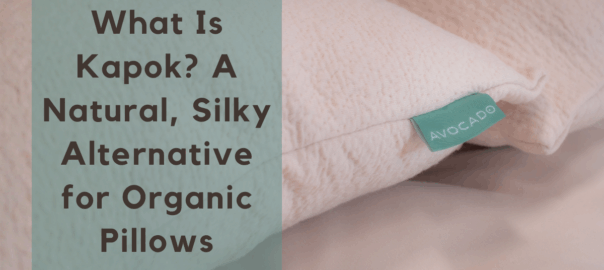
What Is Kapok A Natural Silky Alternative for Organic Pillows

What Is Kapok? A Natural, Silky Alternative for Organic Pillows

If you’ve been shopping for a natural pillow, you’ve probably noticed how limited the options can feel. Many pillows still rely on memory foam or synthetic fiberfill, even when they’re marketed as “eco-friendly”.

That’s often when people start hearing about kapok.

Kapok is a natural, plant-based fiber used in organic pillows as an alternative to both synthetic fills and animal-based down. It’s soft, airy, and breathable – but it behaves very differently than most pillow materials people are familiar with.

Understanding what kapok is, how it feels, and how it’s used can help you decide whether it’s the right fit for your sleep.

What Kapok Is Made From

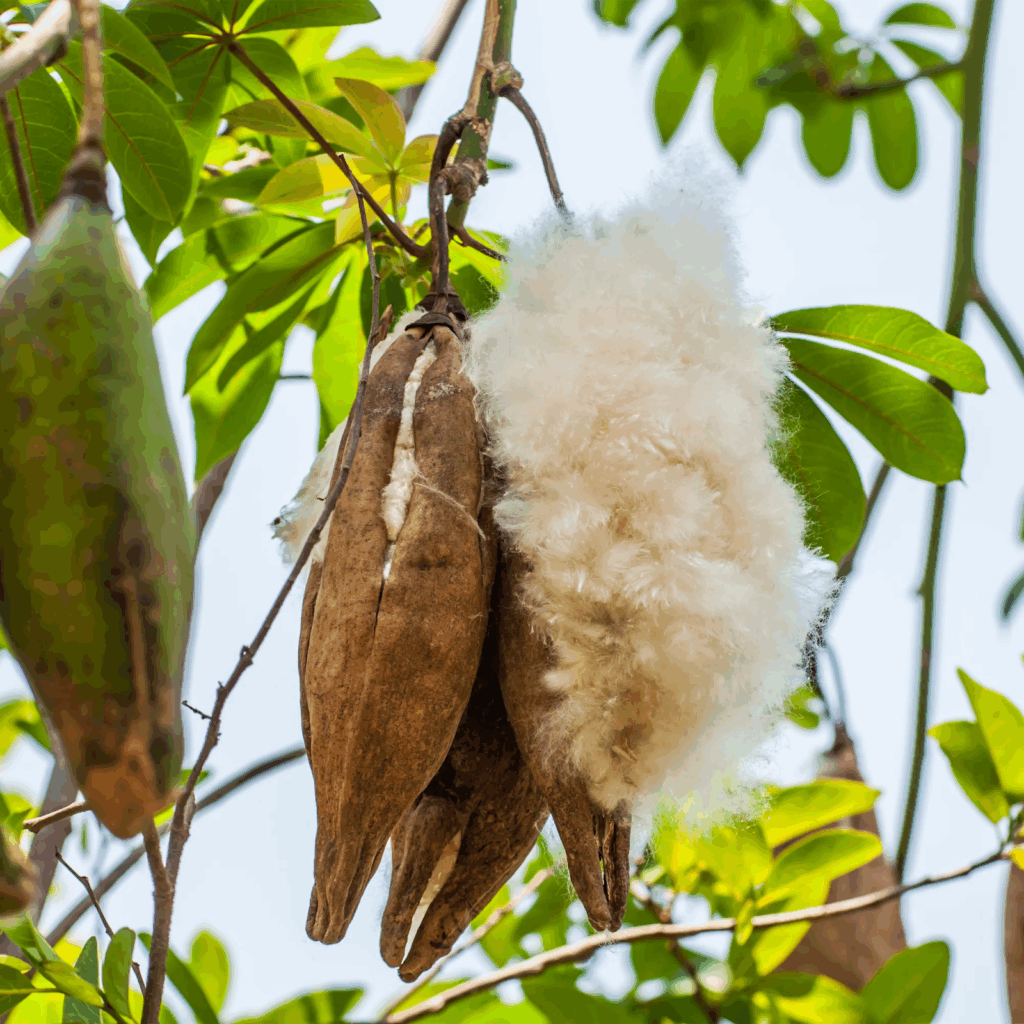
Kapok comes from the seed pods of the kapok tree, a tropical tree native to Central and South America as well as Southeast Asia. When the pods mature, they open and release silky fibers that surround the seeds.

Those fibers are harvested, cleaned, and used as a loose fill material.

Unlike cotton or wool, kapok is not spun into yarn. It’s used in its natural, fluffy form – similar to down. That structure is what gives kapok its lightweight, buoyant feel.

Why Kapok Is Considered a Natural Fiber

Kapok is considered a natural fiber because it comes directly from a plant source and requires minimal processing. Kapok trees grow without irrigation, pesticides, or fertilizers, which is why the fiber is often associated with more sustainable bedding.

That said, whether a pillow is considered natural or certified organic depends on the entire construction – including the cover fabric and how all materials are processed. Kapok itself is natural; the finished pillow matters just as much.

image

How Kapok Feels in a Pillow

Kapok is extremely lightweight. In a pillow, it tends to feel:

  • Soft and buoyant, not dense
  • Silky when paired with a quality organic cotton cover
  • Responsive when you move, without slow sink
  • Breathable, with minimal heat retention

Many people describe kapok pillows as airy or floating rather than heavy or structured. Because the fibers are naturally hollow, air moves easily through the pillow, helping it sleep noticeably cooler than memory foam.

Kapok works especially well for sleepers who want a soft pillow without trapped heat or resistance.

Kapok vs Synthetic Pillow Fills

Kapok behaves very differently from common synthetic fills.

Synthetic pillows are typically petroleum-based, heavily processed, and designed to hold a uniform shape. They often trap heat and rely on chemical treatments to feel soft.

Kapok pillows, by contrast:

  • Use a natural, plant-based fill
  • Allow airflow through the fibers
  • Feel soft without heat buildup
  • Respond quickly as you change positions

For sleepers trying to reduce synthetic materials in their bedroom, the difference is easy to feel.

Kapok and Organic Certifications

Kapok itself is natural, but certified organic pillows depend on more than the fill.

Certified organic kapok pillows typically include:

  • Certified organic cotton covers
  • Transparent sourcing and processing standards
  • No chemical flame retardants or artificial softeners

Looking at certifications and full construction details helps separate genuinely organic pillows from those that simply use natural-sounding materials.

Kapok Pillows at Houston Natural Mattress

At Houston Natural Mattress, kapok is most commonly found in natural and organic pillows designed to offer a soft, breathable alternative to foam. 

Try the Avocado Green Pillow
This adjustable pillow combines GOTS-certified organic kapok fiber with GOLS-certified organic latex, allowing sleepers to customize loft and support. Kapok provides softness and airflow, while latex adds gentle structure. It’s a popular option for people who want softness without collapse.

Pros of Kapok Pillows

Kapok pillows are often chosen because they offer:

  • Natural, plant-based fill
  • Soft, silky comfort without heaviness
  • Excellent airflow
  • Quick response when moving
  • No petroleum-based foam

They’re especially appealing to people who sleep warm or prefer a softer, plusher feel.

Limitations of Kapok

Kapok isn’t ideal for everyone. Some considerations:

  • Less structured than latex or wool
  • May need occasional fluffing
  • Not the best option for those who want a very firm pillow

Kapok performs best when softness and breathability matter more than strong support.

The Bottom Line

Kapok is a natural, silky plant fiber that offers a breathable alternative to synthetic pillow fills. It excels in pillows where softness, airflow, and responsiveness matter most.

For shoppers interested in natural or certified organic pillows, kapok is worth experiencing in person to understand how it compares to latex, wool, and down.

Try Kapok Pillows in Person in Houston

If you’re shopping for a natural or organic pillow in Houston, visiting a showroom makes a real difference. Texture, loft, and airflow are difficult to judge online.

At Houston Natural Mattress, you can try kapok pillows from Avocado, compare them with other latex and wool options, and get straightforward guidance from a team that understands how these materials actually perform.

Houston Natural Mattress
6111 Kirby Dr
Houston, TX 77005
(832) 582-6324

Store Hours:
Monday–Friday: 10 AM–7 PM
Saturday: 10 AM–5 PM
Sunday: 12–6 PM

Visit our Houston showroom to find a pillow that fits how you sleep – not just what’s trending.
No pressure. Just better materials and better sleep.

Oversized Beds Explained

Oversized Beds Explained: Family Beds, Wyoming King, Alaskan King, and Custom Size Mattresses in Houston, TX

Mattress sizes were standardized decades ago, when bedrooms were smaller and beds were used almost exclusively for sleeping. Today, Houston homes look dramatically different. Primary suites are larger, lifestyles are more relaxed, and the bed has become a shared space for sleeping, lounging, movie nights, kids, and pets.

As the way we use our bedrooms has evolved, so has the demand for beds that truly fit modern living. For many homeowners, even a standard king mattress can start to feel limited.

image

Everything is bigger in Texas, and for a growing number of Houston households, that includes the bed.

Oversized options like the Wyoming, Texas, and Alaskan Kings, along with fully custom Family Beds, offer more space, proportion, and presence in large-scale bedrooms. When designed and built correctly, they can transform not just how a bedroom looks, but how it functions day to day.

Quick Summary

Oversized beds like the Wyoming King, Texas King, Alaskan King, and custom Family Bed are redefining comfort in Houston homes. True one-piece construction and Vispring’s bespoke craftsmanship deliver lasting support, proper proportion, and long-term performance at scale.

Oversized Mattress Sizes Explained

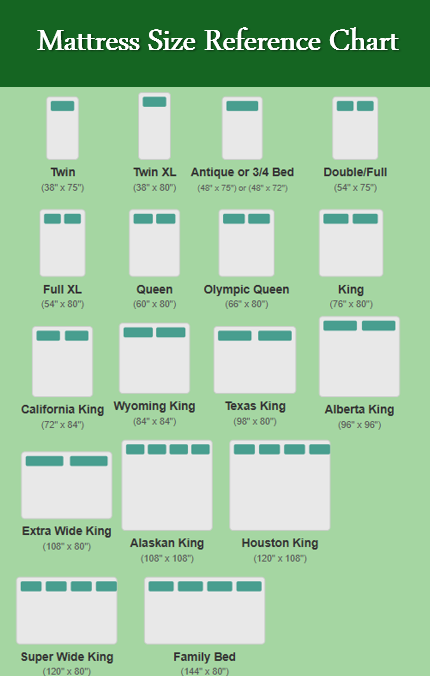
Oversized mattresses are typically chosen for large primary suites, open floor plans, or families who spend meaningful time together in bed. Common options include:

Mattress SizeDimensions (inches)Best ForRoom Type
Wyoming King84 × 84Couples, petsLarge primary suites
Texas King80 × 98Taller sleepersLong or rectangular bedrooms
Alaskan King108 × 108Families, shared loungingOversized bedrooms
Family Bed144×80 or CustomFully custom use casesCustom homes and builds
image

These extra-large mattress options are especially popular in Houston, where room proportions often support a larger footprint without overwhelming the space.

Why Oversized Beds Are Becoming So Popular

People love their king mattress until real life joins them in bed.

Children climb in during the night. Large dogs stretch out. One partner runs warm or moves frequently. Movie nights turn into full-family hangouts. Suddenly, what once felt generous can feel crowded.

Oversized beds address these realities. They’re ideal for co-sleeping, lounging, and statement pieces in large-scale bedrooms, but they’re also a practical choice for hot sleepers, restless sleepers, and anyone who feels confined on a standard king mattress.

They also solve a design problem. In many large primary suites, a standard bed can feel visually undersized. An oversized bed restores balance and proportion, anchoring the room the way a grand dining table or sectional sofa would.

Design and Scale: Matching the Bed to the Room

In well-designed bedrooms, scale matters as much as comfort.

Large Houston homes often feature tall ceilings, wide sightlines, and expansive floor plans. When the bed doesn’t match that scale, the room can feel underfurnished or visually disconnected. An oversized bed brings cohesion, grounding the space and giving the bedroom a sense of intention.

This is one reason oversized beds are increasingly specified by interior designers working on custom homes and large renovations.

Why Most Oversized Mattresses Fall Short

This is where many oversized mattresses fall short, and where buyers often discover the downside too late.

Most oversized mattresses are not truly one piece. They’re often scaled-up versions of standard beds, built with shortcuts that only reveal themselves over time. Commonly, two smaller mattresses are joined together, or foam designs are stretched beyond what they were intended to support. Over time, a noticeable ridge or trench can form down the center of the bed. Support becomes inconsistent, and sleepers may feel sagging or separation where the sections meet.

When shopping for an oversized luxury bed in Houston, construction quality matters far more than marketing language.

Common pitfalls include:

  • Mattresses made from multiple joined sections, which can develop seams or uneven support.
  • Foam-heavy designs, where compression occurs unevenly across very wide surfaces.
  • Two-mattress solutions, where separate beds are paired together without creating a cohesive sleep surface.

At oversized dimensions, these issues are more than a minor annoyance. Replacing or repairing a mattress of this size is costly and disruptive.

The One-Piece Advantage: Why Construction Matters at Scale

Because Vispring builds a continuous, hand-nested coil unit across the entire mattress, support remains uniform from edge to edge. There’s no center seam, no transition zone, and no weak point over time.

Most oversized mattresses rely on zip-together sections or glued foam slabs. As the mattress ages, these joins often become pressure points. By contrast, Vispring’s one-piece construction allows the mattress to respond as a single system, even at very large dimensions.

This uniformity becomes especially important for couples, families, and restless sleepers who use the full width of the bed every night.

Vispring: The Bespoke Standard in Custom-Size Mattresses

For Houston clients seeking a handcrafted, custom-size mattress, Vispring represents the bespoke standard. Made in England using traditional techniques since 1901, each mattress is crafted to endure for decades and finished with premium natural materials including British wool, cashmere, cotton damask, and horsehair, then backed by a 30-year guarantee.

image
100” x 84” Masterpiece Superb
(This Masterpiece Superb was commissioned for a family of four for movie nights!)

Each mattress is built by skilled craftspeople who layer, stitch, and finish every component by hand, creating consistent performance across the entire surface, even at oversized dimensions.

For an independent perspective, see this Homes & Gardens review of Vispring mattresses.

Minimum Room Size Guide

Before selecting an oversized mattress, it’s important to confirm that the room can comfortably support the scale.

Mattress SizeMinimum Recommended Room Size
Wyoming King14 × 14 ft
Texas King14 × 16 ft
Alaskan King16 × 16 ft

These guidelines allow for proper circulation, nightstands, and visual balance within the room.

How Does a One-Piece Oversized Mattress Get Inside the Home?

Vispring oversized mattresses are crafted as a single, one-piece mattress. That’s why access planning is an essential part of the process.

Before commissioning an oversized or custom mattress, it’s important to check doorway, hallway, stairwell, and ceiling clearances. Most standard entry doors in the U.S. are 80 inches tall, though 96-inch doors or larger are increasingly common in newer or higher-end Houston homes.

In many cases, oversized mattresses can be delivered through tall doorways, open staircases, or even through windows or balconies when necessary. As with large sofas, pianos, or custom millwork, taking careful measurements in advance ensures a smooth delivery.

For Designers, Architects, and Builders

Houston Natural Mattress regularly works with interior designers, architects, and builders specifying beds for large primary suites. We coordinate on sizing, construction details, access planning, and timelines to ensure a seamless installation. We are ASID industry partners and you can apply to our Designer Trade Program here. 

Visit Houston Natural Mattress

At Houston Natural Mattress, we work with homeowners, interior designers, and builders who understand that a bed of this scale is a long-term decision. Our sleep gurus bring decades of hands-on experience in the mattress industry, and consultations typically focus on lifestyle needs, construction details, and access planning before any recommendations are made.

Clients can experience Vispring models in person, explore custom sizing options, and discuss projects in a relaxed, unhurried setting.

If you’re exploring an oversized luxury bed, an extra-large mattress Houston homeowners can truly live on, or a custom mattress Houston families can grow into, we invite you to visit our showroom. We’re happy to review measurements, answer logistical questions honestly, and help you decide whether a custom Vispring mattress makes sense for your space, your family, and the way you live.

Houston Natural Mattress
6111 Kirby Dr
Houston, TX 77005
(832) 582-6324

Store Hours:
Monday–Friday: 10 AM–7 PM
Saturday: 10 AM–5 PM
Sunday: 12–6 PM

If you’re located in Central Texas, you’re also welcome to visit our Austin Natural Mattress showroom for the same custom, materials-focused guidance in your family bed journey.

No pressure. Just thoughtful guidance and better sleep.

MattressTopper TheNaturalMattress 1

Can a Mattress Topper Fix a Bad Bed? Sometimes – Here’s When

A Houston Consumer Guide

Mattress toppers are often marketed as a quick fix for an uncomfortable or aging bed. The reality is more nuanced. Sometimes a topper truly can transform sleep comfort. Other times, it simply hides a deeper problem and delays the inevitable.

Knowing the difference can save money, frustration, and more than a few restless nights.

If you’re shopping for a latex mattress topper or wool mattress topper in Houston, this guide will help you understand when a topper is a smart investment and when replacing the mattress is the better move.

Quick Decision Guide: Will a Topper Actually Help?

A mattress topper is likely to help if:

  • Your mattress feels too firm but still flat and supportive
  • You experience pressure at the hips or shoulders
  • You want to adjust comfort without replacing the mattress
  • You’re looking for a lower-cost or temporary improvement

A mattress topper is unlikely to help if:

  • There is visible sagging greater than about one inch
  • You wake with lower-back pain
  • You feel stuck in a dip or trough
  • The mattress feels collapsed or uneven

At-a-Glance: Comfort Problem vs Likely Solution

Your Mattress Feels:Likely Solution:
Too firm but still supportiveAdd a latex or wool topper
Sagging or unevenReplace the mattress
Hot and humidTry a wool topper
Firm with shoulder or hip pressureTry a latex topper

This quick snapshot often answers the question before you even reach the showroom.

The Golden Rule of Mattress Toppers

A mattress topper adjusts comfort.
A mattress provides support.

That one truth saves countless buyers hundreds of dollars each year. If your bed is too firm but still flat and supportive, a topper is a solution.

If your bed is sagging, a topper is a bandage.

When a Mattress Topper Helps — and How to Tell If You Need One

A topper works best when the mattress underneath is structurally sound.

If the surface is flat and supportive but uncomfortable, a topper can:

  • Reduce pressure at the hips and shoulders
  • Improve surface feel without changing support
  • Fine-tune comfort for side sleepers and people who change positions at night

In these cases, a topper is not a compromise. It’s a thoughtful adjustment.

When a Mattress Topper Can’t Fix Your Bed (and It’s Time to Replace It)

A topper cannot repair a mattress that has given out.

Warning signs include:

  • A visible dip where you sleep
  • A spine that dips where the mattress has broken down
  • Difficulty changing positions
  • Waking sore despite added cushioning

When the core support fails, adding softness on top often makes alignment worse, not better.

The Simple At-Home Test (The String Test)

This quick check tells you whether your mattress still has structural integrity.

  • Stretch a piece of string tightly across the mattress surface.
  • Look at the space between the string and the mattress.
  • If the gap exceeds about one inch, your mattress has started to sag.

A topper will sink into that low spot rather than fix it.

Many Houston customers come in and say, “I did the string test from your site, and my bed didn’t pass.” At that point, the conversation becomes very clear.

Latex vs Wool Mattress Toppers: Which Should You Choose?

Both latex and wool toppers are excellent natural options, but they solve different problems.

FeatureLatex Mattress TopperWool Mattress Topper
Primary BenefitPressure relief and responsivenessTemperature and moisture control
FeelResilient, buoyant, supportivePlush, softening
Heat ManagementNeutral to coolExcellent for hot sleepers
Best ForFirm beds, side sleepers, joint painNight sweats, humidity
DurabilityDurability
8–10+ years (very durable)
Several years, gradual compression

Choose Latex for Pressure Relief and Alignment

Latex gently pushes back instead of collapsing, relieving pressure without letting you sink too deeply.

Choose Wool for Temperature Regulation

In Houston, humidity and thermostat disagreements are real. Wool naturally regulates heat and moisture, keeping hot sleepers cooler and cool sleepers comfortable. It’s often the quiet peacekeeper for couples.

Natural vs Synthetic Mattress Toppers: Why It Matters

Synthetic foams are insulators. They trap heat and reflect it back at you, which is why many people sleep hot on memory foam toppers.

Natural latex and wool are conductive. Air moves through the material, preventing the oven effect common with big-box toppers.

Certifications like GOLS (latex) and GOTS (wool) help verify material quality and long-term performance.

Mattress Topper Thickness Guide: 2″ vs 3″ and More

  • 2 inches: Light comfort adjustment
  • 3 inches: Meaningful pressure relief for most sleepers
  • More than 3 inches: Only appropriate if the mattress is very firm and flat

More thickness is not better if the mattress underneath is already failing.

How Long Do Quality Mattress Toppers Last?

  • Latex toppers: Often 8–10 years or longer
  • Wool toppers: Several years, with gradual compression

One overlooked benefit is reusability. A high-quality natural topper isn’t disposable. If you upgrade your mattress later, it can often move with you and enhance the new bed.

When to Replace Your Mattress Instead of Adding a Topper

If you’re stacking layers, rotating constantly, or chasing comfort without success, it may be time to stop layering and address the core issue.

A topper should improve a good mattress, not rescue a worn-out one.

A Final Word for Houston Shoppers

If you’re considering a latex or wool mattress topper in Houston, honest guidance matters. At Houston Natural Mattress, we help customers decide whether a topper is the right step or whether replacement makes more sense. Bring photos of your mattress wear, measurements, or simply describe how it feels—we’ll give you a clear recommendation either way.

Houston Natural Mattress
6111 Kirby Dr
Houston, TX 77005
(832) 582-6324

Store Hours:
Monday–Friday: 10 AM–7 PM
Saturday: 10 AM–5 PM
Sunday: 12–6 PM

Visit our Houston showroom for straightforward guidance, natural latex and wool topper options, and clear answers about whether a topper will truly help—or if it’s time to replace the mattress. No pressure. Just honest guidance and better sleep.

FAQs

Can a mattress topper fix a sagging mattress?
No. If sagging exceeds about one inch, replacement is the better investment.

Is latex or wool better for hot sleepers?
Wool regulates temperature more actively. Latex sleeps cooler than synthetic foams but is more neutral.

How thick should a mattress topper be?
Two inches for light change, three inches for meaningful cushioning.

How long do natural toppers last?
Latex: 8–10+ years. Wool: several years, depending on care and use.

Press Release: Austin Natural Mattress Launches Toys for Tots Holiday Partnership | AP News

This year, Houston Natural Mattress is proud to partner with Toys for Tots to bring joy to local children in need. Through Christmas, every purchase at our store will automatically trigger a toy donation—no extra steps required. Toys for Tots will distribute all donations to families across the Houston area.

“Every year, our customers look for meaningful ways to give back,” said Charles Roberts. “By partnering with Toys for Tots, we’re able to make a direct impact in our community during a season that should be joyful for every child. One purchase equals one new toy under the tree for a child in need.”

hnm christmas photo
Pillows HoustonNaturalMattress

What’s Really Inside Your Pillow? A Houston Guide to Healthier Sleep

What’s Living in Your Pillow

Every night, you shed thousands of dead skin cells that become food for dust mites – microscopic bugs invisible to the naked eye. Add in moisture from sweat, and you’ve created the perfect breeding ground for bacteria and mold. Not the most pleasant thought to have right before bed, I know. After about two to three years, these contaminants can make up a surprisingly large portion of your pillow’s weight.

What Scientists Found

Researchers at the University of Manchester studied ten used pillows and published their findings in the medical journal Allergy. The results? Every single pillow contained millions of fungal spores, with 4-16 different fungal species per pillow. The most common was Aspergillus fumigatus, which can cause respiratory problems, especially for people with asthma or compromised immune systems.

The Dust Mite Problem

Dust mites live in about 80% of American homes – there’s no shame in it, they’re just part of life. Their waste produces allergens (Der p 1 and Der f 1) that trigger sneezing, runny nose, and asthma symptoms. According to the American Lung Association, around 20 million Americans deal with dust mite allergies.

Here’s the key: dust mites need humidity above 50% to survive.

Why Houston’s Humidity Makes It Worse

If you live in Houston, you know about the humidity. Our Gulf Coast climate averages 75% humidity, with mornings often hitting 90%. For pillows, this is basically a worst-case scenario.

All that moisture creates the perfect environment for dust mites and bacteria to multiply way faster. And here in Houston, they thrive year-round.

Synthetic pillows have a tendency to trap heat and moisture more than other materials and magnify the problem. 

Pillow Materials Comparison

MaterialDust Mite ResistanceMoisture ManagementLifespanWashableChemicalsHouston Climate
Memory FoamLowPoor2-3 yearsNoHigh VOCsPoor
Polyester FillLowPoor1-2 yearsYesModeratePoor
Down/FeatherLow*Moderate3-5 yearsYesNoneModerate
Natural LatexHighExcellent5-10 yearsNoNoneExcellent
Organic WoolHighExcellent5-10 yearsDry cleanNoneExcellent
KapokHighGood3-5 yearsHand washNoneGood
Buckwheat HullsHighExcellent5-10 yearsNoNoneExcellent

*With proper feather-proof cover

Memory Foam Pillows

Made from petroleum-based polyurethane, memory foam conforms nicely to your head and neck, but it traps heat, can’t be washed, and in Houston’s climate, that heat retention makes summer nights uncomfortable. They last 2-3 years before losing support and are prone to dust mites and mold..

Polyester Fill Pillows

Walk into any big-box store and you’ll find shelves full of polyester pillows. They’re cheap and machine washable, but here’s the reality: they’re plastic fibers.

Research in Allergy, Asthma and Immunology found polyester pillows had eight times more dust mite antigen than feather pillows. Why? Synthetic pillow covers have looser weaves than feather-proof covers, making it way easier for dust mites to get inside.

In Houston’s humidity, polyester pillows become bacteria breeding grounds within months. They last only 1-2 years before becoming flattened and lumpy.

Down and Feather Pillows

There’s a myth that down pillows are terrible for allergies. But research in Annals of Allergy, Asthma & Immunology tells a different story. While unprocessed feathers contain dust mite allergen, the commercial washing process removes this.

The study even put processed feather pillows in bedrooms with high dust mite levels, and the pillows didn’t get contaminated over 90 days. The secret? Those tightly-woven, feather-proof covers keep dust mites out better than loose synthetic covers.

You can machine wash them on gentle cycle, but they must dry completely or you’ll grow mold. With proper care, these last 3-5 years.

Our Pick: The Coyuchi Organic Down Pillow features responsibly-sourced down in an organic cotton sateen cover. The tight weave prevents dust mite penetration while the down provides luxurious comfort.

Natural Latex Pillows

Natural latex comes from rubber tree sap. They tap the trees, whip it into foam, and bake it into a supportive material. Unlike memory foam, there’s no petroleum and no harmful chemicals..

Latex naturally fights off dust mites and bacteria. Its dense structure and natural proteins create an environment that microbes don’t like. Studies back this up – latex pillows stay cleaner way longer than synthetic ones. Plus, latex is naturally breathable and doesn’t trap heat like memory foam, which is perfect for Houston summers.

These cost more upfront (around $100-$180), but they last 5-10 years. You can only spot-clean them – never throw them in the wash. 

Our Pick: The Avocado Green Pillow with Shredded Latex features 100% GOLS-certified organic latex and is adjustable – you can add or remove fill to customize your comfort level. Perfect for Houston’s climate with its breathable, cooling properties.

Organic Wool Pillows

Wool has remarkable properties. It absorbs up to 30% of its weight in moisture without feeling wet, pulling humidity away from your body all night. In Houston, that’s invaluable.

Wool naturally regulates temperature (cool in summer, warm in winter) and is naturally flame-resistant, so manufacturers don’t need to spray it with chemicals. The natural lanolin fights off microbes, and the dry environment it creates is hostile to dust mites.

These need professional dry cleaning and last 5-10 years. They’re not cheap, but if you don’t have a wool allergy, they’re ideal for our climate.

Our Pick: The Naturepedic Organic Wool Pillow is GOTS-certified organic and made in the USA. Its superior moisture-wicking properties make it ideal for Houston’s humidity, keeping you dry and comfortable all night.

Kapok Pillows

Kapok is a silky fiber harvested from Kapok tree pods. It’s naturally buoyant and light, giving you that down-pillow feel. The hollow fibers provide good insulation while staying naturally moisture-resistant.

If you’re vegan or want to avoid down, kapok is a solid choice. It’s naturally hypoallergenic and you can hand-wash it gently at home. These last 3-5 years and handle Houston’s humidity well.

Buckwheat Hull Pillows

These are a little different. Buckwheat hull pillows have been used in Asia for centuries – they’re filled with the outer shells of buckwheat seeds. The hulls move independently to mold to your head and neck, and the spaces between them let air flow freely. They stay surprisingly cool.

Research shows these don’t collect dust mite allergen the way other pillows do. The structure and lack of material for mites to eat makes them naturally resistant. In Houston’s heat, that air circulation is a real advantage.

Fair warning: they make a slight rustling sound when you move. Some people find it soothing, others annoying. You can wash the cover but not the hulls – just air them out in sunlight occasionally. These last 5-10 years without needing replacement.

How to Keep Pillows Cleaner

Use Pillow Protectors: Get a zippered pillow protector with a tight weave that goes over your pillow before the pillowcase. These create a physical barrier that stops dust mites from getting in or out. Research shows tight-weave covers significantly reduce allergen exposure.

Wash Cases and Protectors Weekly: Use hot water – at least 130°F. This temperature kills dust mites and bacteria. Cold water just gives them a bath. Wash both your pillowcase and pillow protector every week. According to Mayo Clinic, this is one of the most important steps for managing dust mite allergies.

Wash Your Face Before Bed: This removes oils, dirt, makeup, and bacteria that transfer straight into your pillow. Less contamination means your pillow stays cleaner longer.

Give Pillows Some Sun: Every few weeks, set your pillows in direct sunlight for 2-3 hours. Flip halfway through. Sunlight’s UV rays naturally kill bacteria, dust mites, and fungal spores. It’s free, natural, and it works.

Washing Instructions by Material

  • Memory Foam: Spot clean only with damp cloth and mild soap. Never machine wash or soak – water destroys the foam.
  • Polyester: Machine wash gentle cycle, warm water. Dry on low with dryer balls. Limit to every 2-3 months – washing speeds up breakdown.
  • Natural Latex: Spot clean only. Never wash or submerge.
  • Kapok: Hand-wash gently in cool water. Air dry completely (1-2 days). Once or twice yearly.
  • Buckwheat: Wash the cover, air out hulls in sun monthly. Hulls never need washing.
  • Wool: Professional dry cleaning annually.Down: Machine wash gentle cycle. Run 2-3 dryer cycles with tennis balls until completely dry. If not totally dry, you’re growing mold. Only wash 1-2 times yearly.

Which Materials Stay Clean Longest?

Research shows natural latex, wool, and buckwheat naturally resist dust mites and bacteria. These materials create environments microbes hate through dense structure (latex), moisture-wicking (wool), and air circulation (buckwheat).

Here’s where it gets interesting with cost. A $20 synthetic pillow lasting 1-2 years costs $200 over 10 years. A $100 natural latex pillow lasting 10 years costs $100 total. You’re actually spending less long-term with the natural option, plus sleeping on a cleaner pillow.

When to Replace Your Pillow

Most experts say replace pillows every 1-2 years for synthetics, but natural materials last 5-10 years. Signs it’s time:

  • Lumps, flat spots, or lost support
  • Yellow or brown stains that won’t wash out
  • Persistent musty smell after washing
  • Increased nighttime allergy symptoms
  • Morning neck pain or headaches
  • Visible tears or exposed filling

Quick test: fold your pillow in half. If it stays folded instead of springing back, it’s done.

Why Material Matters More Than Cleaning

Washing pillowcases and using protectors definitely helps, but these steps can’t fix synthetic pillows’ core problem: they absorb and trap contaminants deep inside where your washing machine can’t reach.

Washing pillowcases removes surface contamination. Pillow protectors create a barrier but don’t clean what’s already inside. Once allergens, dust mites, and bacteria work into the structure of polyester and memory foam, they’re basically permanent residents.

Natural materials work differently from the start. They resist contamination through antimicrobial properties and moisture management. Think of it like this: cleaning routines are essential maintenance, but material choice determines how well your pillow resists contamination in the first place.

Choosing the Right Pillow

For allergies or asthma: Natural latex, wool, or buckwheat are your best bet. Always use allergen-proof covers and follow replacement schedules.

For Houston’s humidity: Materials that handle moisture well – wool, latex, and buckwheat. They wick moisture, allow airflow, and resist mold and mildew.

Budget: Look at cost per year, not just sticker price. That $20 synthetic pillow replaced yearly costs more over five years than a $100 natural latex pillow lasting eight years.

Frequently Asked Questions

Q: How often should I replace different types of pillows?

A: Replacement schedules vary significantly by material:

  • Synthetic/polyester pillows: Every 1-2 years
  • Memory foam pillows: Every 2-3 years
  • Down/feather pillows: Every 3-5 years
  • Natural latex pillows: Every 5-10 years
  • Organic wool pillows: Every 5-10 years
  • Buckwheat hull pillows: 5-10 years (hulls rarely need replacing)

Natural materials last significantly longer because they resist contamination better from the start. However, you should replace any pillow sooner if you notice lumps, permanent stains, persistent odors, or increased allergy symptoms.

Q: What pillow height (loft) is best for my sleep position?

A: Pillow height depends on your primary sleep position:

  • Side sleepers: Need higher loft (4-6 inches) to fill the space between your shoulder and head, keeping your spine aligned. Our adjustable shredded latex pillows work great because you can customize the fill.
  • Back sleepers: Medium loft (3-5 inches) provides support without pushing your head too far forward. Buckwheat and wool pillows offer good medium support.
  • Stomach sleepers: Low loft (2-3 inches or less) prevents neck strain. Kapok pillows can be compressed to a lower height.
  • Combination sleepers: Adjustable pillows like our Avocado Shredded Latex Pillow let you modify height as you change positions.

Visit our showroom to try different heights and find what feels best for your body.

Q: Are natural pillows really worth the extra cost?

A: When you look at the total cost over time, natural pillows often cost less. A $20 synthetic pillow replaced every year for 10 years costs $200. A $100 natural latex pillow lasting 10 years costs $100 total – half the price. Plus, natural pillows stay cleaner, sleep cooler in Houston’s climate, and don’t expose you to chemicals. The upfront investment pays off in both health and savings.

Q: Which pillow is best for hot sleepers in Houston?

A: For Houston’s heat and humidity, we recommend:

  1. Natural latex – Breathable, doesn’t trap heat like memory foam
  2. Organic wool – Wicks moisture away from your body
  3. Kapok – Light and breathable
  4. Buckwheat hull pillows – Superior airflow 

Avoid memory foam and polyester, which trap heat and moisture – the worst combination for Houston summers.

Q: How do I know if my pillow is causing my allergies?

A: Common signs your pillow is triggering allergies:

  • Waking up congested or with a runny nose
  • Morning sneezing fits
  • Itchy, watery eyes upon waking
  • Worsening asthma symptoms at night
  • Symptoms improve when you’re away from home

If you notice these patterns, try washing your pillowcase and protector in 130°F+ water. If symptoms persist, your pillow itself may be contaminated and need replacement. Natural latex, wool, or buckwheat pillows with allergen-proof covers are your best defense.

What Our Customers Say

“After switching up all my food, water, clothing to more organic and chemical free options, it’s time for a mattress switch. My boyfriend and I went shopping for a new mattress here and not only were they so helpful and informative – the mattresses, toppers and pillows are AMAZING! Please go support this small business bringing healthier mattresses to Houston.” 

“Steve assisted us on making sure we got the right mattress, topper, pillows, and adjustable bed frame! His expertise and genuine care made the whole process easy and enjoyable.” 

“He also helped us find the pillows we needed. We had really old pillows and needed newer ones. I really appreciate how honest, kind and helpful the store was for our family.”

Visit Houston Natural Mattress

Ready to breathe easier and sleep better? Visit our Houston showroom today to try natural latex, organic wool and kapok pillows in person. Our sleep experts will help you find what works for Houston’s climate and your specific sleep needs.

Houston Natural Mattress Location:

6111 Kirby Dr, Houston, TX 77005
(832) 582-6324
info@houstonnaturalmattress.com

Hours:

  • Monday-Friday: 10:00 AM – 7:00 PM
  • Saturday: 10:00 AM – 5:00 PM
  • Sunday: 12:00 PM – 6:00 PM

Serving: Houston, Sugar Land, The Woodlands, Katy, Pearland, Cypress, Spring, and surrounding areas

Why Choose Houston Natural Mattress:

  • 100 Night Sleep Trial on all pillows and mattresses
  • Lowest Price Guarantee
  • 0% Interest Financing available
  • Over 1,000+ verified 5-Star Reviews
  • Non-commissioned sleep experts (no pushy sales)
  • Family-owned and locally operated since 1999

Schedule your free pillow consultation today. Call (832) 582-6324 or visit us to experience the difference natural materials make.

Scientific Sources

Create A Sleep Sanctuary HoustonNaturalMattress scaled

How to Create a Sleep Sanctuary in Houston, Texas

Houston is busy and humid; your bedroom should feel easy. If you want to end each day in a calm, cozy space that supports real rest, start with a few simple rules trusted by top interior designers, sleep coaches, and home-wellness experts.

After dark, light gets warm and low (and mornings get bright)

Design doesn’t matter if the light is wrong. At night, keep lamps warm and dim so your body understands it’s evening: swap in soft/warm white bulbs on the bedside table, keep overheads off after dinner, and dim for the last hour before sleep. Phones, tablets, and TVs should live in Night Mode after sunset—warmer color, lower brightness, a little farther from your eyes. The key is to minimize blue light which increases eye strain and can confuse your body that it is still daytime. Blackout drapery finishes the story; keep a tiny amber path light to the bathroom so you never blast yourself awake at 2 a.m.(Why this helps: Harvard Health on evening light & melatonin.)

The other half happens tomorrow morning. Within an hour of waking, get 10–30 minutes of outdoor light (porch coffee counts). That contrast, warm, dim evenings; bright, natural mornings, teaches your internal clock when to wind down and when to wake up.

Choose calming wall colors

Goal: calm mood + gentle light at night.

  • Pick: low-saturation, soft hues, blue-gray (with a hint of green), sage/eucalyptus/soft olive, warm greige/taupe/mushroom, or pale oatmeal/parchment.
  • Finish: scrubbable matte or eggshell on walls (cuts glare), satin/semigloss on trim only, and a soft warm white or half-tint on the ceiling.
  • Test right: paint two 24″×24″ samples (two coats), view in morning, late afternoon, and under your warm bedside lamps with blackout closed, this is your true bedtime look.
  • Avoid: bright reds/oranges, stark cool whites, and glossy walls (they amplify glare).
  • Health note: choose low/zero-VOC paint, keep bedroom humidity ≤50%, and ventilate 48–72 hours before sleeping there.

Bottom line: soft blues/greens, warm or gentle neutrals in matte/eggshell = restful, luxe, and easy on the eyes at night.

Quiet the room: the hush that lets you exhale

Block outside sounds and soften echoes with heavier-lined curtains and a rug + thick pad. A door sweep takes the edge off hallway noise. You don’t need perfect silence; you need a steady, gentle hush. A low fan or white-noise machine turns sharp sounds into a background you don’t notice. (Benchmark: bedrooms around 30 dB LAeq with spikes below 45 dB LAmax; WHO guideline.) Don’t forget to switch phones to Do Not Disturb and park them on the dresser.

Declutter the space (less to look at, easier to relax)

Clear floors, hide cords, and use closed storage for “visual noise.” A tidy layout helps your body wind down. Keep a clear path to the bathroom and place the hamper and trash where you’ll actually use them.

Air that feels cool, dry, and easy to breathe

Most people sleep best cooler. In Houston, start near 67°F and fine-tune a degree either way. Keep humidity around 45–50% so the room feels dry, not muggy. A small hygrometer on the nightstand makes it effortless. If humidity won’t dip, run a quiet dehumidifier for a few evening hours. For cleaner air, add a HEPA purifier sized to your room and let it run on low overnight. (EPA guardrail: keep indoor humidity 30–50%, always under 60%, EPA guide.)

The mattress: where the hotel feel actually comes from

That five-star feeling isn’t about a mountain of pillows, it’s the core of the bed. The quickest path at home is a natural latex or organic latex-hybrid build:

  • Cooler, drier nights. Latex’s open, springy structure moves air, so you’re not chasing cool spots.
  • Even, instant support. It pushes back right away, your spine stays neutral whether you’re on your back or side.
  • Quiet durability. Quality latex holds its feel for years, so you keep the “new bed” comfort.

Feel it in our Houston showroom (linked product pages):

Quick benefits: Local Delivery • Old Mattress Haul-Away • Comfort Exchange (ask us for details)
Ready to try? Book a 20-Minute Sleep Fitting · Call Now

Why memory foam underperforms in Houston (it’s what’s inside that counts)

We’ll be plain: in our heat and humidity, dense memory foam is the wrong tool for most sleepers.

  • Holds heat and humidity. It softens with body heat and tends to keep that warmth and moisture, clammy on muggy nights.
  • “Stuck” feeling. Slow rebound makes position changes feel like work at 2 a.m.
  • Odor & chemical emissions risk. Polyurethane foams and adhesives can off-gas VOCs, and higher temperatures and humidity increase emissions (Frontiers in Built Environment review).
  • Impressions over time. Lower-density foams flatten faster at the hips and shoulders.
  • Fire tests = hidden layers. To pass flammability standards, many foam mattresses use fiberglass sleeves inside the factory cover or other barrier systems; some models (especially older or cheaper builds) have used added flame-retardant chemicals. Look for “fiberglass-free” and “no added flame retardants.” (Background: CPSC FAQ; CA AB-2998 FAQ.)

Important: never remove a mattress cover that says “Do Not Remove.” That label often indicates a fiberglass barrier inside. Keep it closed and use a washable, breathable mattress protector on top.

Materials your skin actually enjoys

Luxury isn’t glossy; it’s effortless comfort. In Gulf-coast humidity, choose breathable fibers and light layers:

  • Sheets: percale cotton for that cool hotel hand, or linen if you run warm (it softens beautifully).
  • Top layer: a light cotton or wool blanket to move moisture without trapping heat.
  • Mattress protector: a breathable cotton protector with a thin waterproof layer (often TPU), not vinyl/PVC. (What to look for: chemical-free mattress covers guide.)
  • Pillow protector: zip-on protectors keep pillows cleaner and reduce allergen buildup. (More detail: allergy cover guide.)

Laundry that’s skin-kind: Use fragrance-free detergent; skip fabric softener. If you miss softness, add ¼–½ cup distilled white vinegar in the rinse to break down leftover detergent.

Nightstand provisions (stay asleep by staying put)

Staying asleep is easier when you don’t leave the room.

  • Insulated tumbler with a lid, fill with ice water before bed so you never make a kitchen run (and never face bright light).
  • Quiet mini-fridge if you need water, meds, or a light snack at night. Choose a model marketed quiet/silent (target ~30 dB), place it away from the headboard on rubber feet, leave a few inches for ventilation, and cover bright LEDs.

Allergen control that actually helps (painless routine)

  • Sheets & pillowcases: weekly hot wash (≥130°F) + hot dry (Mayo Clinic).
  • Protectors: wash mattress protector and pillow protectors monthly (or quarterly if you use a topper and keep surfaces clean).
  • Pillows: replace every 1–2 years
  • Vacuum & dust: HEPA vacuum floors/rugs; damp-dust so particles don’t float back up.

Visit us – feel the difference

We’ll help you map the right mattress feel, breathable layers, and finish for that calm, hotel-level bed—without the hotel bill.

Houston Natural Mattress
6111 Kirby Dr, Houston, TX 77005
Hours: Mon–Fri 10–7 • Sat 10–5 • Sun 12–6
Call: (832) 582-6324


Also read: Buyer Beware: How to Spot the Difference Between a Luxury Mattress and an Imposter


Sources (linked)

AvocadoGreenMattressPillowcotton 800x

Avocado Pillow Guide in Houston, TX

Alright, Houstonians, if you’ve ever woken up with a stiff neck, you know a pillow can make or break your night. The Avocado Green Pillow is a favorite because it sleeps cooler, provides good support, and lets you set the loft that fits your body.

Why Avocado Green stands out

  • Certified organic inputs. Real GOLS latex and GOTS cotton, a simple, transparent materials story that sleeps cooler.
  • Durable comfort. Latex keeps its spring and shape longer than typical synthetic fills.
  • Custom fit. The Green model is adjustable, so one pillow can work for different bodies and sleep positions.

Why latex is a superior sleeping surface, especially in Houston

  • It simply breathes better. Latex’s open, springy structure moves air and reduces heat build-up on humid nights.
  • It provides steady support. Latex responds instantly and evenly, helping keep your neck aligned.
  • It feels right on skin. Natural fibers (latex, kapok, cotton) stay drier and feel more natural than dense foams.

What’s inside an Avocado pillow?

  • GOLS-certified organic latex (shredded) for lively support
  • GOTS-certified organic kapok for cloud-soft loft
  • GOTS-certified organic cotton cover that’s removable and machine-washable

Adjustable filling = easy neck alignment

Unzip, add or remove fill, and dial it in:

  • Side sleepers: Keep more fill to support the shoulder-to-neck gap
  • Back sleepers: Aim mid-loft so your chin stays level
  • Stomach sleepers: Go low-loft to reduce neck strain

Molded latex vs. adjustable, what’s the difference?

ModelFeelAdjustabilityBest For
Green (Adjustable)Medium-plush; breathableAdd/remove latex + kapokSide & combo sleepers; fine-tuning loft
Molded LatexConsistent; springyFixed heightBack or stomach sleepers needing zero fuss

60-second fit check

Lie in your usual position. Add or remove a handful of fill at a time. Stop when your nose lines up with the center of your neck and your chin is level, not tilted up or down.

Care & lifespan

  • Cover: Machine wash on gentle; air dry or tumble on low heat
  • Fill: Do not machine-wash; keep dry and fluff as needed
  • Protector: Use a breathable protector to guard from sweat and oils
  • Typical life: 3–5 years of steady support for most sleepers

Shop & compare in Houston

Houston Natural Mattress 

6111 Kirby Dr, Houston, TX 77005 

Call: (832) 582-6324

Call Us: Tap to call

Hours: Mon–Fri 10–7; Sat 10–5; Sun 12–6